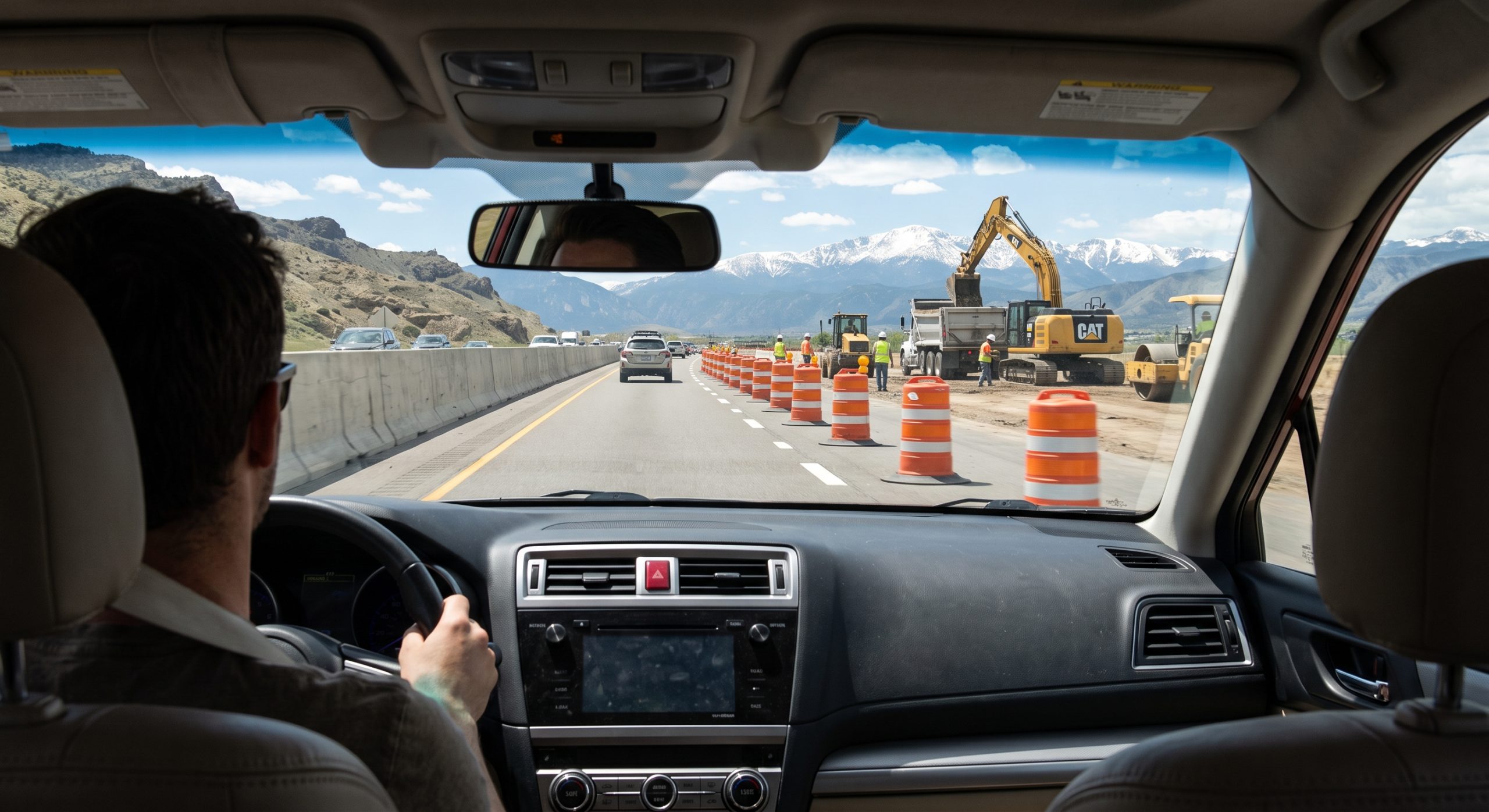
Every September 1st, the Vail Valley has the same conversation: it’s still warm, the aspens haven’t turned, and somehow it’s already illegal to drive Vail Pass without winter-ready tires or chains. That part hasn’t changed — the stretch of I-70 between Vail Pass and Dotsero has been under the Traction and Chain Laws for years. What has changed is exactly who the law applies to and how — and this year’s update is one drivers should actually pay attention to.
What’s Different This Year
For years, the rule of thumb was simple: if you had all-wheel drive or four-wheel drive, you were generally fine. CDOT tightened that up for the 2025–2026 season. Now, an AWD or 4WD vehicle only satisfies the Traction Law if it’s also running one of the following, at a minimum 3/16″ tread depth:
- Tires marked mud and snow (M+S or M/S) or with the mountain-snowflake symbol
- Dedicated winter tires
- Tires with a manufacturer all-weather rating
If your AWD SUV is riding on worn all-season tires that don’t carry one of those ratings, it’s no longer automatically compliant — regardless of drivetrain.
The bigger shift is for two-wheel-drive and front-wheel-drive vehicles. Under Senate Bill 25-069, 2WD/FWD drivers must carry chains or an approved alternative traction device (ATD) — think AutoSock or a cable-style device — for the full September 1 through May 31 window on the I-70 mountain corridor. Tires alone no longer count, no matter how they’re rated. The one nuance worth knowing: you don’t have to have them physically installed every day of the season, just carried and ready — they only need to be affixed to two or more drive tires once CDOT activates the overhead signs showing the Traction Law is in effect.
One honest caveat: state lawmakers acknowledged in late 2025 that the statutory language around 2WD vehicles caused real confusion, and indicated they plan to clarify it during the 2026 legislative session. We’ll update this post if that happens — but the practical guidance from CDOT and the Colorado State Patrol right now is to carry chains or an ATD if you’re not running AWD/4WD with rated tires.
It’s Not Just Vail Pass Anymore
For anyone driving I-70 between Vail Pass and Dotsero — the stretch most Vail Valley locals deal with every day — the Traction and Chain Laws have applied for years, and that hasn’t changed. What has changed is how much territory beyond it is now covered.
Senate Bill 24-100 expanded the commercial “Must Carry” chain law well past our local corridor. Commercial motor vehicles over 16,000 lbs. now have to carry chains or ATDs, from September 1 to May 31, on:
- I-70 west of Morrison (mile marker 259) to the Utah border, which includes our Vail Pass–Dotsero stretch
- Colorado 9, Frisco to Fairplay (mile markers 63–97)
- US-40 west of Empire (mile marker 256) to the Utah border
- US-50 west of Salida (mile marker 225) to the Utah border
- US-160 west of Walsenburg (mile marker 304) to the New Mexico border
- US-285 west of Morrison (mile marker 250) to the New Mexico border
- All of US-550, Durango to Montrose
(Important Legal Disclaimer: Under Colorado SB24-100, the mandatory September 1st to May 31st chain-carry requirement now applies to all commercial vehicles (16,001+ lbs GVWR) on I-70, CO 9, US-40, US-50, US-160, US-285, and US-550 regardless of weather conditions. However, for standard passenger vehicles, the continuous 9-month Traction Law mandate remains restricted strictly to the I-70 corridor between Dotsero and Morrison. Please note that weather-activated Code 15 (Passenger) and Code 18 (Commercial) laws can be triggered on any Colorado mountain pass at any time during a storm. We strongly advise checking the official COtrip app or dialing 511 for real-time, route-specific requirements before traveling.)
So if you’re a commercial driver who only associates chain requirements with Vail Pass, it’s worth knowing the rule now follows you onto several other Western Slope routes too.
The Fines, Updated
CDOT’s current published penalties:
- Traction or Chain Law non-compliance: $100 fine plus $33 surcharge
- Causing a lane or highway closure due to non-compliance: $500 fine plus $157 surcharge
For commercial carriers, a chain law citation can also mean a driver and vehicle sidelined at a port of entry until they’re compliant — which is its own kind of expensive.
Getting Ready Before the First Storm
A few practical steps worth taking now, before anyone’s doing it roadside in the dark:
- Check what your tires actually are. Look for the M+S marking, snowflake symbol, or manufacturer all-weather rating — don’t assume “all-season” qualifies.
- Buy your chains or ATD now. Confirm they’re on CDOT’s Approved Products List, and that they fit your specific tire size.
- Practice the install in your driveway. The first time you put on chains shouldn’t be on the shoulder of Vail Pass in a snow squall.
- Commercial drivers: double-check your route against the expanded corridor list above, not just the old I-70 stretch.
If You Get Caught Out Anyway
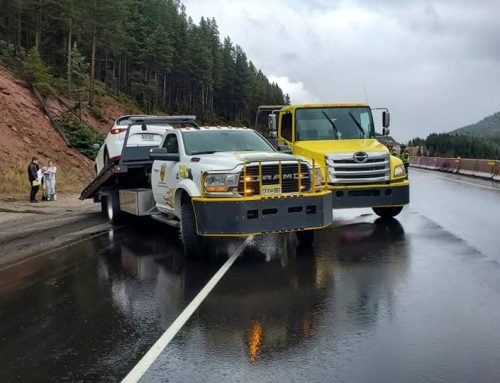
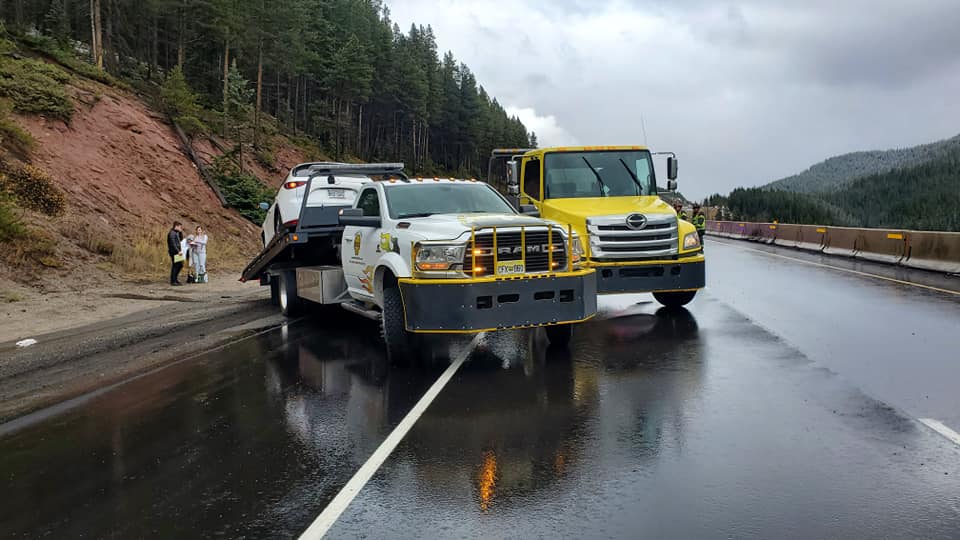
Even well-prepared drivers spin out, slide off, or get stuck once the first real storm hits Vail Pass. If that happens to you — or you get pulled over without chains you didn’t know you needed — our crew is out on that stretch of I-70 day and night through the winter. We’ve pulled everything from a commuter’s sedan out of a snowbank to a semi that couldn’t get chained up before the closure. West Vail Towing & Recovery handles roadside assistance and vehicle recovery throughout Eagle County, with Vail Pass being where we spend most of our winter nights.
Have a breakdown or need a tow this winter? Call us anytime at 970-476-3394.