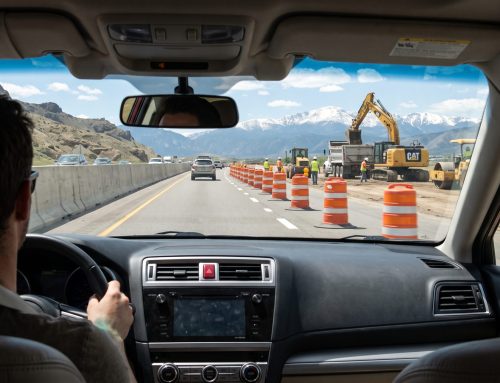
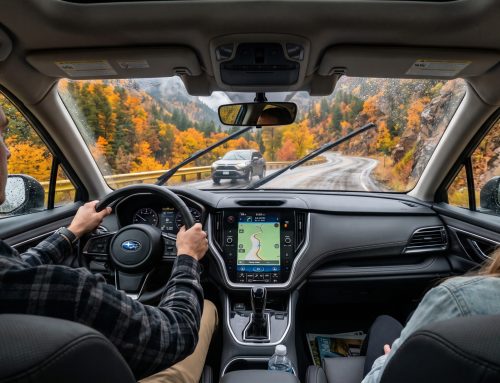
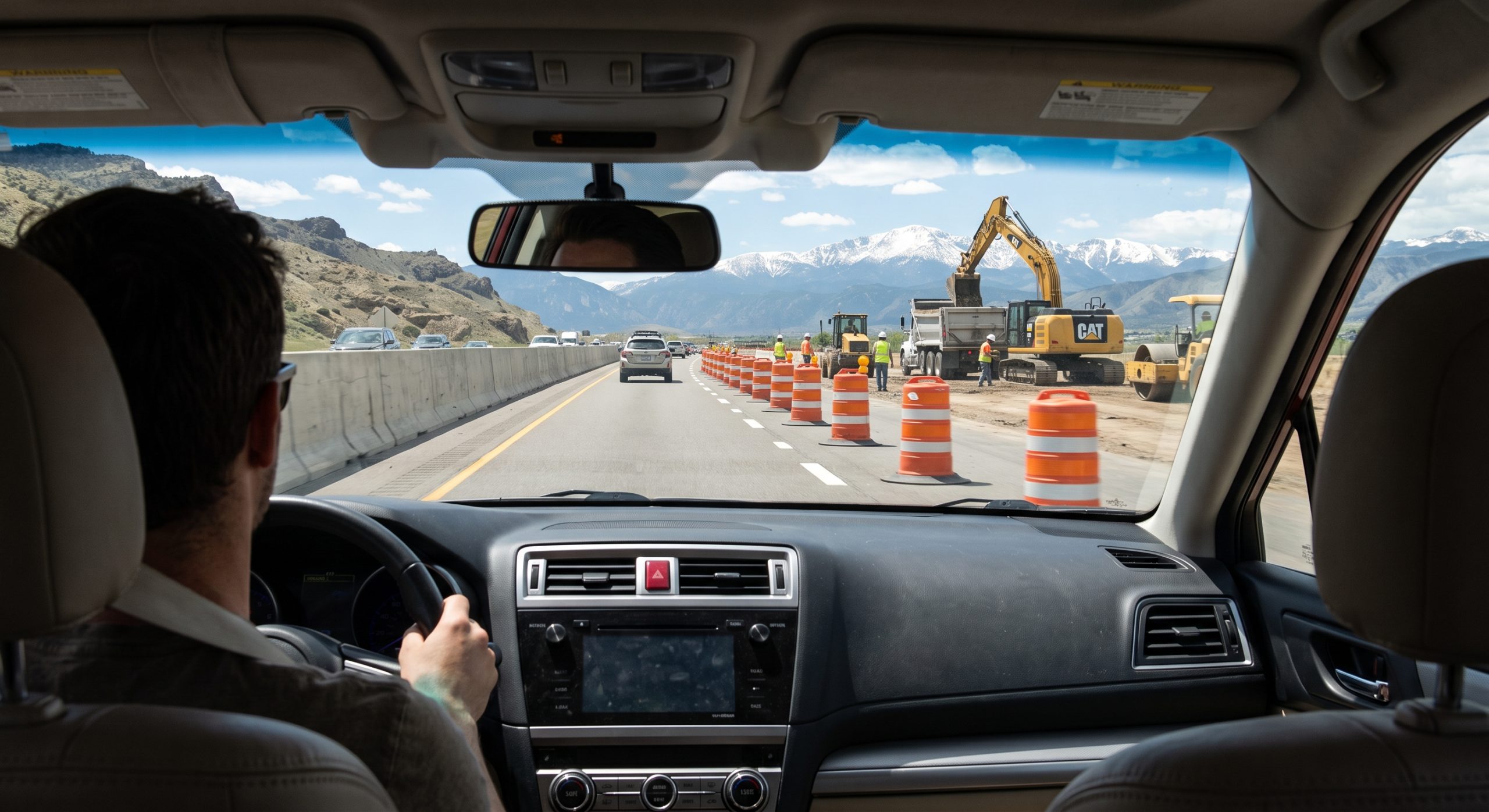
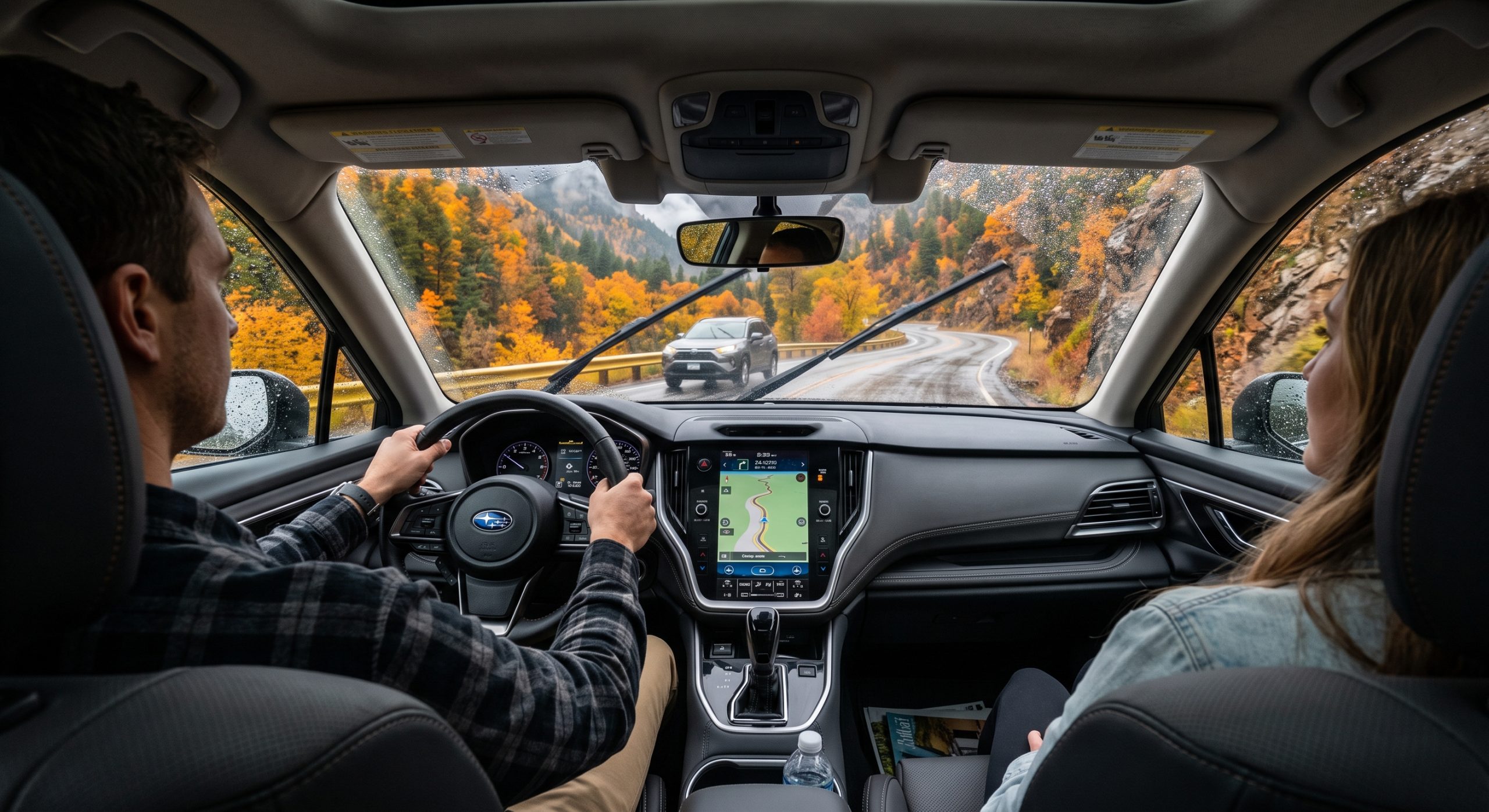
Anyone who has navigated the I-70 stretch through the high Rockies is intimately familiar with the distinct, acrid smell of burnt rubber. Dropping down Vail Pass from its towering 10,600-foot summit is undeniably beautiful, but the descent demands respect.
When a vehicle starts accelerating on a severe downhill grade, the immediate human reflex is to press the brake pedal and leave it there. On an extended, punishing drop like Vail Pass, leaning into that instinct is a recipe for disaster. We have outlined exactly what steep grades do to your hardware, and why mastering your transmission is the key to a safe arrival.
1. The Friction Trap (Why Heat is Your Enemy)
It feels safe to hover your foot on the brake when gravity takes over. While strategic, momentary braking is fine, dragging the pads against the rotors for miles on end creates immense, sustained friction.
The Impact: Friction is the enemy of stopping power because it turns motion into intense heat. As temperatures spike, the compound making up your brake pads degrades, resulting in “brake fade.” This means you end up pushing the pedal closer to the floor just to achieve the same minor reduction in speed. Push it far enough, and the hydraulic fluid in your lines will reach its boiling point, transforming a firm pedal into a spongy, useless sponge that offers zero resistance. Furthermore, shocking the metal rotors with extreme heat can warp them permanently, creating a violent shuddering in the steering column. In a worst-case scenario, the extreme temperatures generated by relentless friction can ignite brake dust, grease, or even the brake fluid itself, sparking a catastrophic vehicle fire. If you roll your window down on the highway and catch that distinct, acrid smell of burnt rubber, you will likely smell it long before you even see the offending car. It is the universal signal that someone ahead is relentlessly riding their brake pedal down the mountain.
The Fix: Lift your foot! Instead of leaning on the friction components, you must rely on the mechanical drag of your engine (downshifting) to dictate your momentum.
2. Engine Braking (Forcing the Drivetrain to Work)
Dropping down a gear—commonly known as engine braking—is the most crucial skill for mountain navigation. Selecting a lower gear forces the engine to spin at higher revolutions per minute (RPMs). Because you are not actively feeding the engine fuel by pressing the accelerator, the engine essentially starves for air, creating internal resistance. This mechanical drag acts as a powerful, organic anchor against gravity.
The Impact: Letting the engine restrict your speed results in a highly controlled, even descent. You avoid the lurching, stop-and-go sensation of tapping the brakes constantly. Most importantly, bypassing the brake pedal entirely means your friction components remain ice-cold and fully operational, saving their maximum stopping power for a moment when you actually need to halt the vehicle unexpectedly.
The Fix: Command the transmission before the road drops away from you.
- Automatics: Shift out of “Drive.” Keep in mind that not all modern cars have a dedicated “L” (Low) on the shifter anymore. Instead, look for a manual mode (“M”), a brake mode (“B”), or lower numbers like “3”, “2”, or “1”. If your steering wheel features paddle shifters, simply click the “-” paddle to step down the gears manually.
- Manuals: Scrub your speed, engage the clutch, blip the throttle to match your revs, and slot into a gear that holds the car back without requiring pedal input.
3. Amplified Risks: Hauling Heavy Loads
Navigating a 6% decline in a sedan is one thing; introducing an RV, a boat, or a heavily laden utility trailer completely rewrites the physics of the descent.
The Impact: Extra mass means gravity has a much stronger grip on your setup, actively pulling you toward the bottom of the canyon. Factory braking systems are engineered for the curb weight of the truck itself, not thousands of additional pounds pushing from behind. Do not assume your trailer’s independent electric brakes will save you; they will overheat and fail just as rapidly under sustained pressure.
The Fix: Proactive gear selection is non-negotiable when towing down the pass. A classic, reliable strategy is to go down the mountain in the same low gear you used to grind up it. Heavy-duty diesel operators must engage the exhaust brake (Jake Brake) at the summit crest. For all modern trucks, verify your Tow/Haul mode is active, as this setting alters the computer’s logic to hold lower gears much longer than usual.
4. The “Snubbing” Tactic (Strategic Cooling)
Even with masterful engine braking, certain stretches of the highway are simply too steep, and gravity will slowly win the tug-of-war, causing your speedometer to creep up.
The Impact: If you leave the transmission in a low gear but still ride the brake pedal to hold your speed back, you will ultimately trigger the same catastrophic heat saturation and fluid boiling we detailed earlier.
The Fix: Adopt the “snubbing” strategy. Never drag the pads. Instead, wait until you are moving slightly faster than you want to be, then apply the brakes heavily and assertively to shave off 5 to 10 mph. Once you hit that lower speed, completely take your foot off the pedal. Let the engine’s drag take over again until the speed inevitably creeps back up, then execute another firm, short brake application. This on-and-off rhythm forces the brakes to do their job quickly, leaving long gaps of time for the high-altitude air to cool the rotors. Pay close attention to yellow grade warning signs (like “6% Grade Next 7 Miles”) so you aren’t caught off guard.
Need Support in the High Country?
Ensure your car is truly mountain-ready by double-checking your brake fluid, transmission, and coolant before heading up to high elevations. We invite you to swing by our headquarters at West Vail Shell to top off the tank and check your levels before tackling the pass.
If you misjudged the grade and your brakes are currently smoking, smelling, or fading, find a safe pull-out immediately and let the hardware cool down. Continuing to drive is incredibly dangerous.
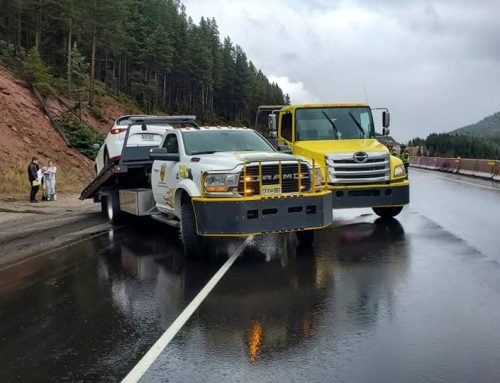
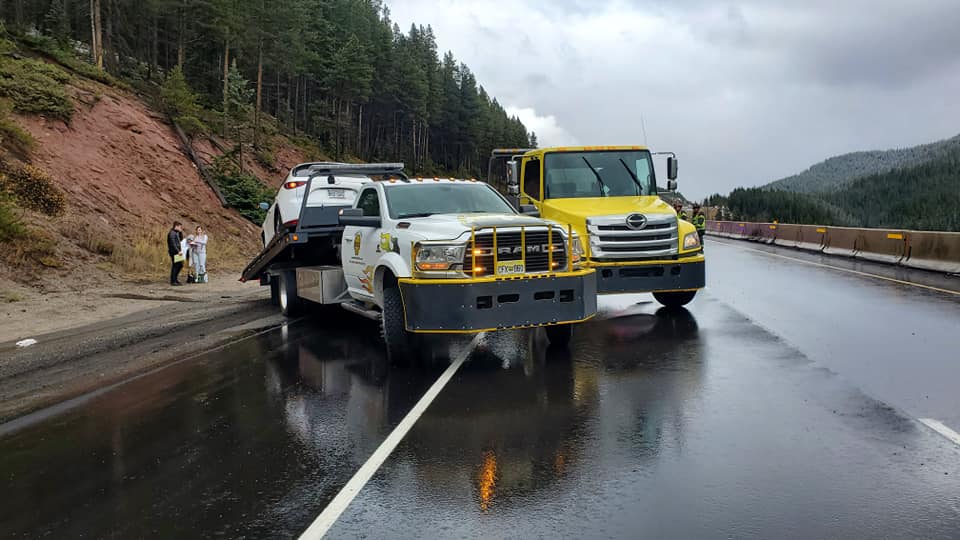
If you find yourself stuck, broken down, or in need of an emergency recovery off the pass, call West Vail Towing at (970) 476-3394. We are a family-owned operation that has been proudly rescuing drivers throughout Eagle County since 1970. Whether you are stranded high up on I-70, deep in Glenwood Canyon, or right down in town, our expert operators are on standby. When you need help, you’ll recognize our rescue team by our fleet of bright yellow and crisp white tow trucks sporting the classic Shell emblem!