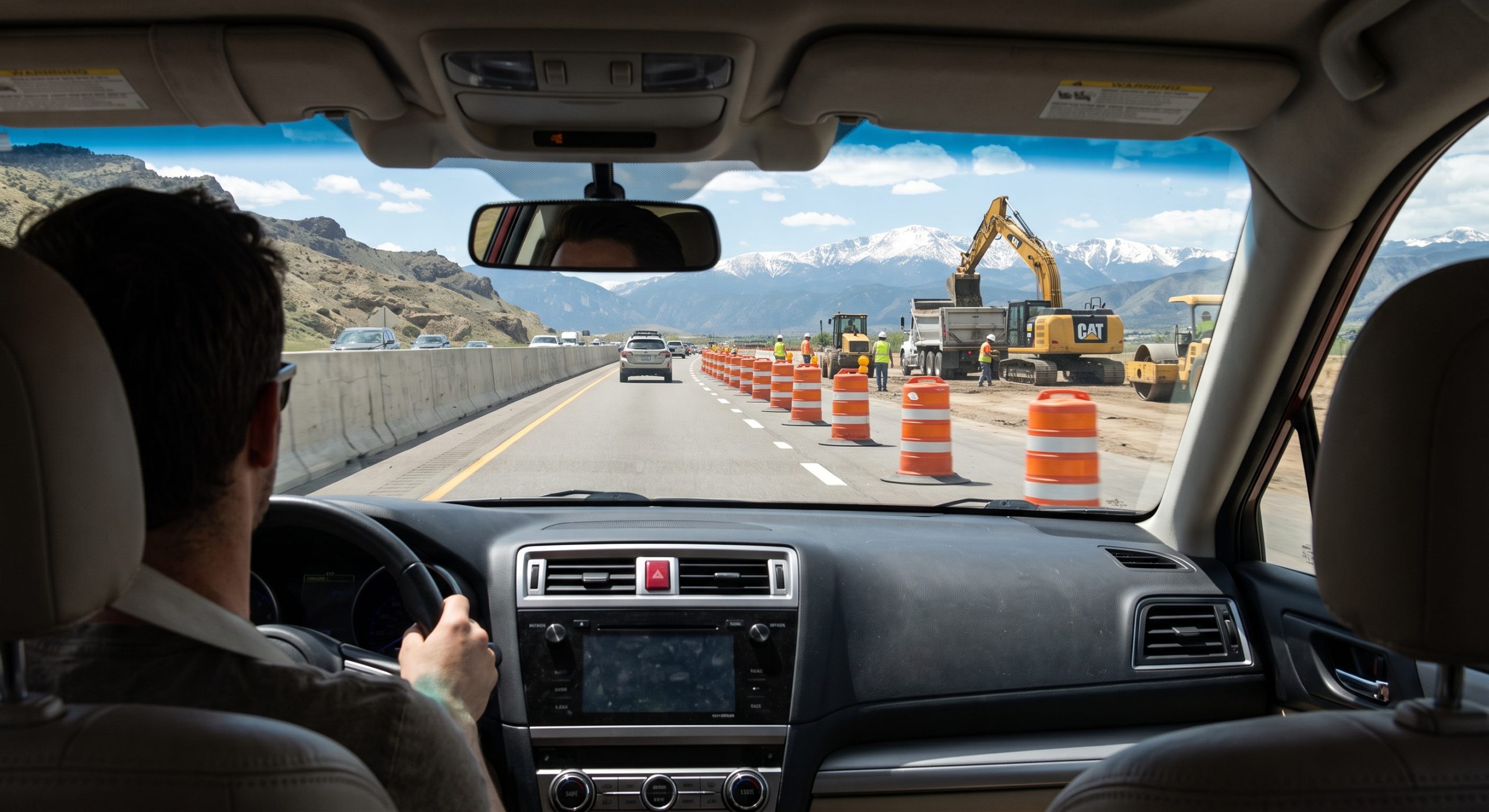
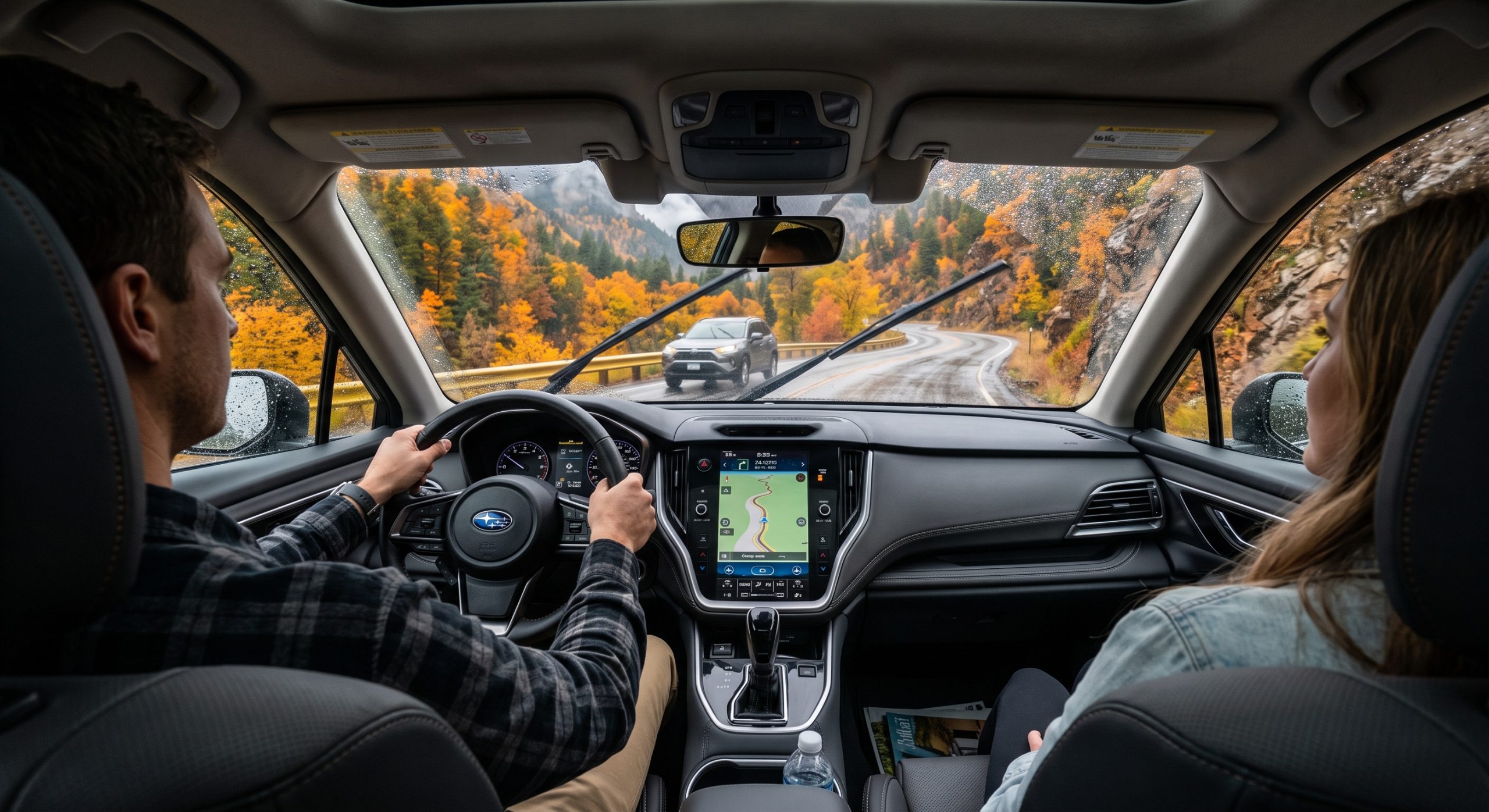
Hearing that unmistakable “thump-thump-thump” of a flat tire while driving is enough to ruin anyone’s day. While changing a tire is a great skill to have, doing it on the side of a road comes with real risks.
Before you even reach for the lug wrench, you need to secure your environment. Here is exactly how to handle a flat safely—and how to know when it’s time to call in the professionals.
1. Securing Your Surroundings
Never attempt to change a tire where you are in danger of being struck by traffic. If your tire blows out, don’t slam on the brakes. Gently take your foot off the gas, maintain control of the steering wheel, and slowly maneuver to safety.
- Find a safe spot: Pull over as far off the road as possible. You need solid, flat ground—never try to jack up a car on dirt, grass, or an incline, as the jack can slip.
- Make yourself visible: Turn on your hazard lights immediately. If you have reflective triangles or flares in your trunk, place them several feet behind your vehicle to warn oncoming drivers.
- Lock it down: Put the car in Park (or in gear if you drive a manual) and firmly engage the emergency parking brake. If you have a heavy rock or wheel wedge handy, place it behind the tires on the opposite side of the flat.
2. Changing the Tire
Once you are completely off the road and secure, gather your spare tire, jack, and lug wrench from the trunk.
- Loosen the Lug Nuts: Using your lug wrench, turn the lug nuts counterclockwise to break the resistance. You might have to use your body weight. Do not remove them completely yet—just loosen them about a half-turn. You need the tire on the ground to keep it from just spinning in the air while you wrench.
- Position the Jack and Lift: Place the jack under the vehicle’s designated jacking point (usually a reinforced metal rib just behind the front tire or ahead of the rear tire). Raise the vehicle until the flat tire is about six inches off the ground.
- Remove the Flat and Mount the Spare: Remove the loosened lug nuts entirely. Pull the flat tire straight toward you to slide it off the wheelbase (lay it flat so it doesn’t roll into traffic). Lift the spare tire and align the rim with the lug bolts, pushing it securely into place.
- Tighten Lug Nuts by Hand: Put the lug nuts back on the bolts and tighten them by hand as much as you can. This ensures the wheel stays straight while you lower the vehicle.
- Lower the Car and Tighten Completely: Carefully lower the jack until the spare tire is resting on the ground, but the car isn’t fully bearing its own weight. Use the wrench to tighten the lug nuts in a star pattern (tighten one, then move to the one directly across from it). This ensures the tire goes on evenly. Finally, lower the car completely and give every lug nut one last hard pull.
3. When to Skip the DIY and Call the Pros
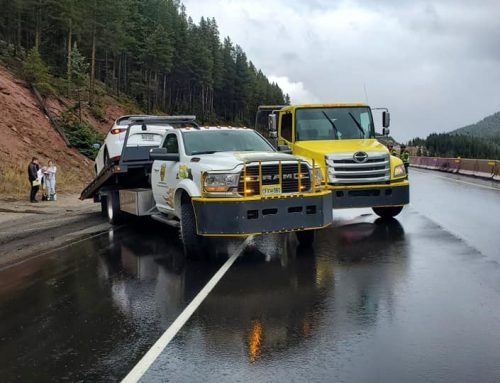
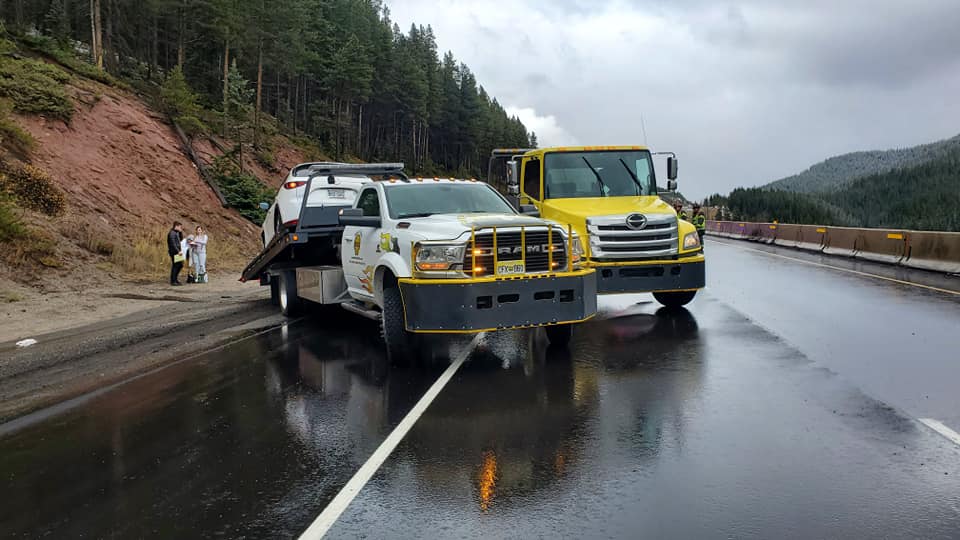
Changing your own tire is empowering, but your life is worth much more than a towing bill. You should always stay in your vehicle with your seatbelt on and call for roadside assistance if:
- You are on a narrow shoulder: If opening your door or crouching by your tire puts your body dangerously close to the white line of a busy highway, do not attempt a change.
- The weather is terrible: Heavy rain, snow, or fog severely limits visibility for other drivers. It also makes the ground slippery and unstable for your car jack.
- You are missing equipment: If you don’t have a jack, a lug wrench, or if your spare tire is flat/missing, you won’t be able to safely finish the job.
- You just don’t feel safe: Trust your gut. If the situation feels sketchy, stay inside.
The Bottom Line
If you find yourself stuck, stressed, or stranded in a dangerous spot, West Vail Towing is here to help. We have been helping drivers navigate roadside emergencies since 1970. Our rapid-response roadside assistance team has the heavy-duty equipment and flashing safety lights to get your tire changed quickly and keep you out of harm’s way.
Don’t risk your life or your vehicle. Get yourself to a safe spot and call West Vail Towing at (970) 476-3394, and let the pros handle the heavy lifting.