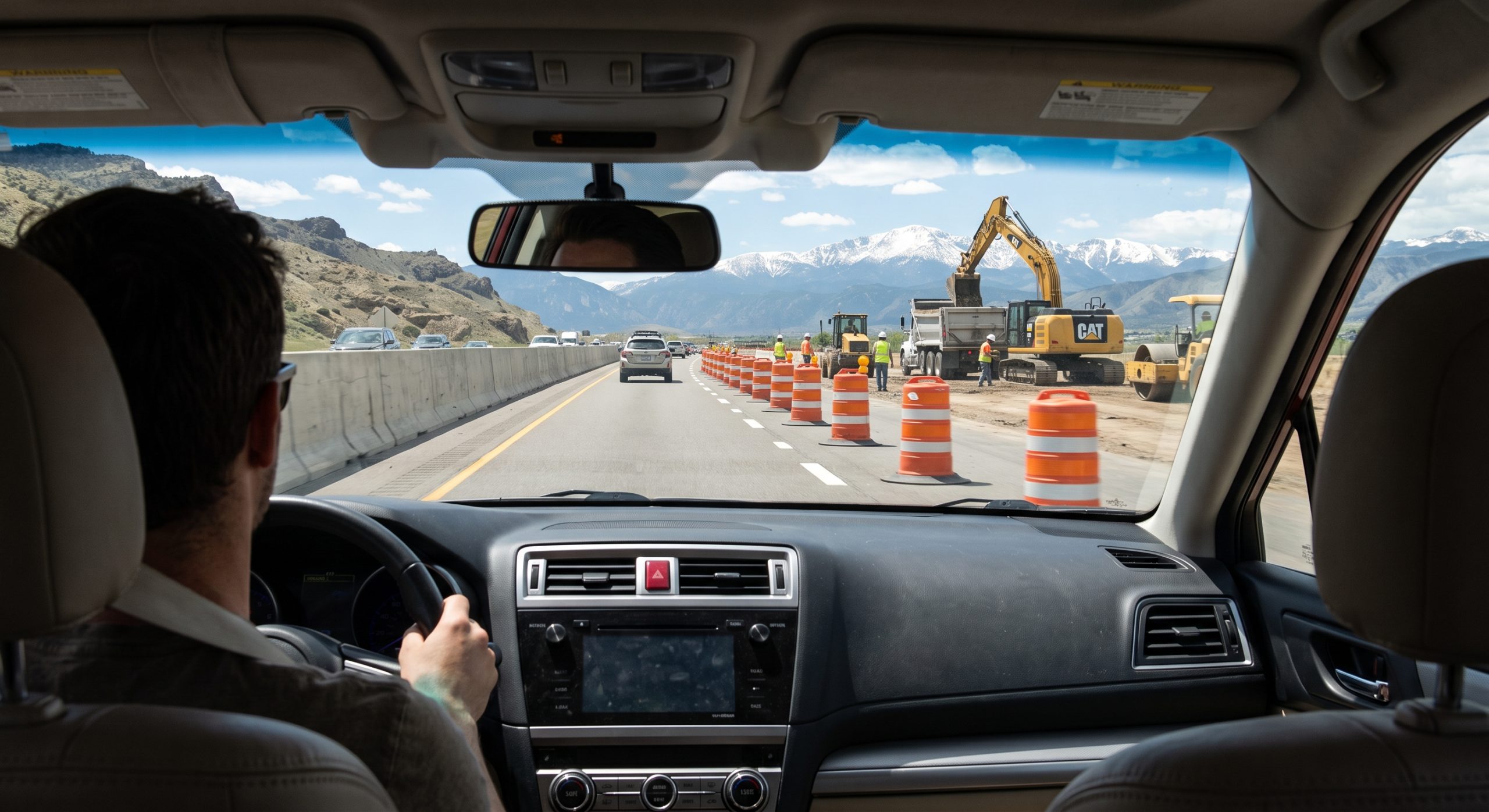
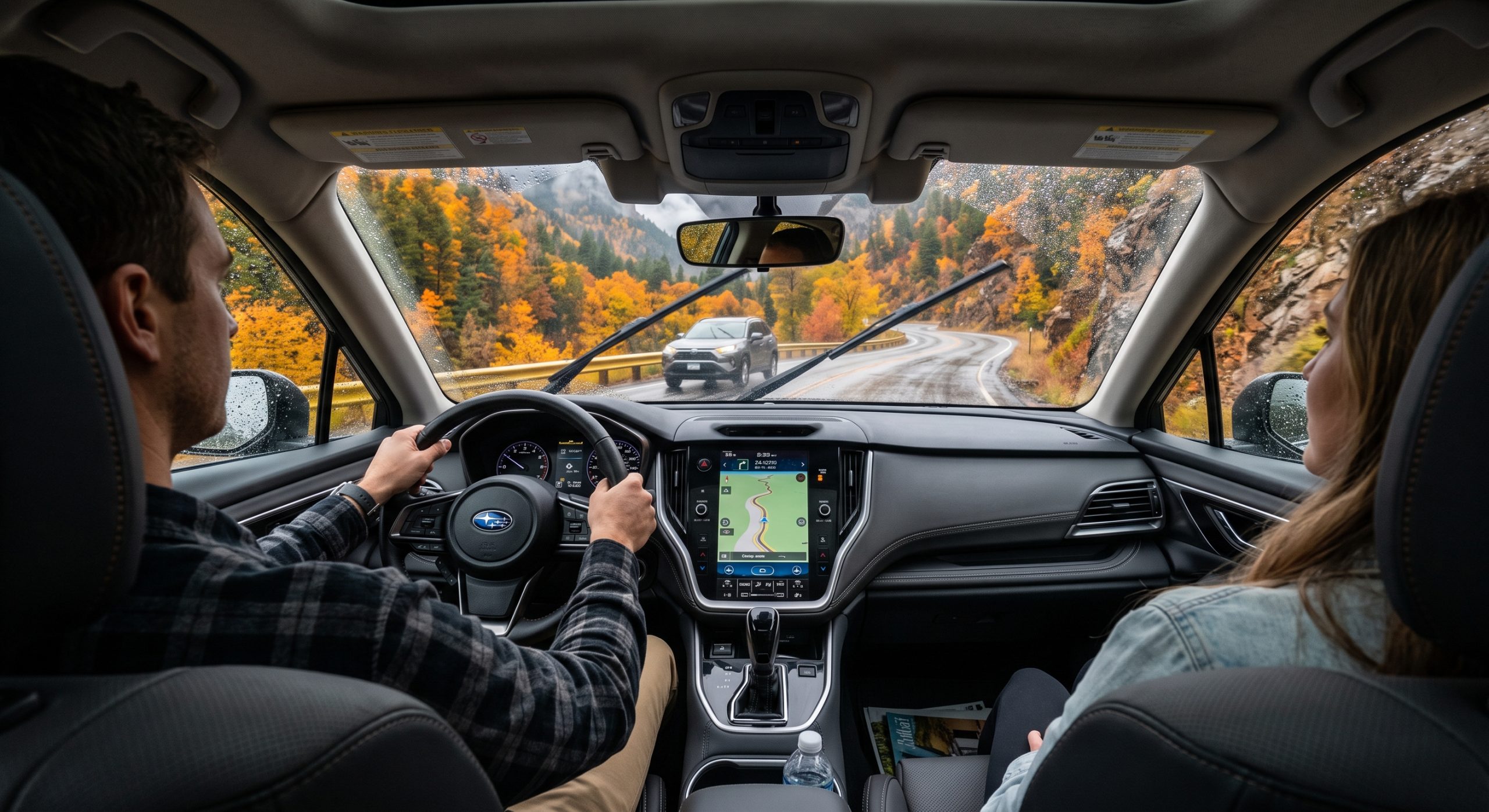
If you’ve ever hiked a steep trail in the Rockies, you know the feeling: the higher you climb, the harder your lungs have to work. The air gets thinner, the temperature drops, and every step requires just a little more effort.
It turns out your car feels the exact same way.
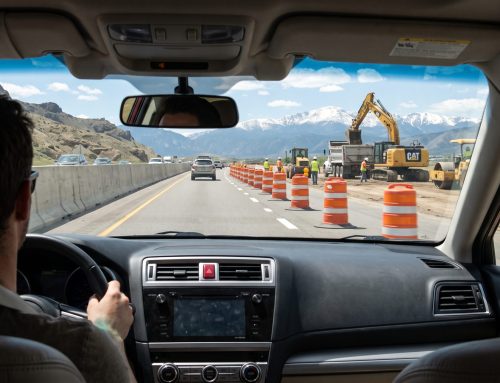
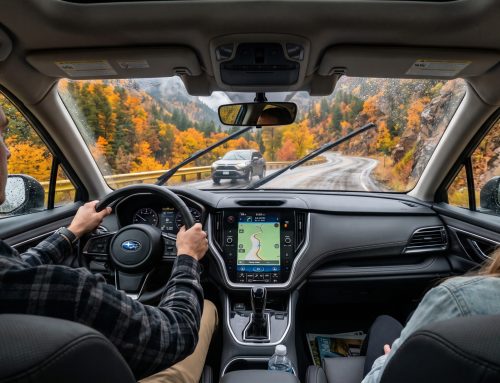
Whether you are a local living in the mountains or a visitor making the trek up I-70 from Denver (5,280 feet), high elevation puts unique and intense stresses on your vehicle. Driving from the Front Range, over the dizzying summit of Vail Pass (Mile Marker 190 at 10,662 feet), and down through valley communities like Vail (MM 176), Avon (MM 167), and Eagle (MM 147) before twisting through the narrow walls of Glenwood Canyon (MM 133 down to MM 116) is one of the most beautiful drives in the country. But it is also a grueling workout for your car.
Understanding exactly how massive elevation changes and mountain driving affect your vehicle can help you avoid unexpected breakdowns and keep you safe. Here is what is actually happening under the hood on the I-70 mountain corridor.
1. Your Engine Loses Power (It’s Literally Gasping for Air)
Internal combustion engines are giant air pumps. They need a precise mixture of fuel and oxygen to generate explosive power. At high altitudes, the atmospheric pressure is lower, meaning the air is less dense and contains fewer oxygen molecules per cubic foot.
The Impact: For every 1,000 feet you climb above sea level, a naturally aspirated engine loses about 3% of its horsepower. That means even when you start your trip in Denver, your car is already down about 15% of its power compared to sea level. By the time you grind your way up the steep grades to the summit of Vail Pass (MM 190), your car is operating with over 30% less power! You’ll notice slower acceleration and a heavy, sluggish feeling when trying to pass. (Note: Turbocharged and supercharged engines force air into the engine, so they suffer significantly less power loss at altitude.)
The Fix: Don’t panic if your car feels lethargic on the uphill; it’s normal physics at work. Just be patient, stay in the right lane if you’re moving slower than traffic, and plan your passes carefully. Before your trip, ensure your engine air filter is fresh and clean so your car can breathe as easily as possible.
2. Tire Pressure Fluctuations Trigger Dashboard Lights
Tire pressure is a delicate balancing act in the mountains due to two competing forces: pressure and temperature. As you drive higher, the atmospheric pressure drops, which naturally causes the air inside your sealed tires to expand. Conversely, mountain temperatures are usually much colder than the plains, and cold air causes tire pressure to contract and drop.
The Impact: These competing factors can lead to wildly fluctuating tire pressures. You might wake up to a chilly mountain morning with an illuminated TPMS (Tire Pressure Monitoring System) light on your dashboard. Driving on under-inflated or over-inflated tires severely reduces your traction—a dangerous prospect on winding roads or in sudden Glenwood Canyon rain showers—and increases the risk of a blowout.
The Fix: Don’t rely on the pressure you set out of state or down in the flatlands. Check your tire pressure manually once you have arrived at your destination and the tires have sat long enough to cool down. Adjust them to the manufacturer’s recommended cold PSI (found on the sticker inside the driver’s side door jamb, not on the tire itself).
3. Vital Fluids Boil at Lower Temperatures and Brakes Take a Beating
Did you know a pot of water boils at a noticeably lower temperature in the high country than it does at sea level? The exact same physics apply to your car’s vital liquids, particularly your engine coolant and your brake fluid.
The Impact: The strain of dragging a heavy car up long, sustained mountain grades creates immense engine heat. Combined with a lower boiling point, your cooling system has to work overtime, easily leading to an overheated engine.
Even more dangerous is your brake fluid. If you ride your brakes on the long, steep descent down the west side of Vail Pass (MM 190 to MM 180), or while navigating the tight curves and sudden braking zones in the 12.5-mile stretch of Glenwood Canyon (MM 133 to MM 116), the friction creates immense heat. That heat can boil the fluid, leading to “brake fade”—a terrifying scenario where your brake pedal goes to the floor and the car doesn’t stop.
The Fix:
- For Coolant: Regularly flush and replace your coolant according to your manufacturer’s schedule. If your engine temperature gauge starts creeping into the red while climbing I-70, turn off your air conditioning, roll down the windows, and turn on the heater (this pulls heat away from the engine). If it stays in the red, pull over safely and let it cool.
- For Brakes: Never “ride” your brakes on long downhills. Instead, downshift into a lower gear (even in an automatic) to let the engine’s natural braking power hold your speed in check.
4. Cold, Thin Air Drains Your Battery
Batteries rely on chemical reactions to generate the juice needed to start your car. Extreme mountain cold slows these chemical reactions down significantly.
The Impact: When you park your car overnight in the high country, the cold zaps the battery’s available power. Furthermore, cold temperatures cause your engine oil to thicken. When you turn the key, your weakened battery suddenly has to work twice as hard to push thick, sludgy oil through the engine block.
The Fix: If your battery is more than three to four years old, have it tested before heading up the hill. Consider switching to a winter-weight synthetic oil if you are spending the season at altitude, as it resists thickening in the freezing cold.
Need a Lift on the I-70 Corridor?
Mountain driving is stunning, but it is undeniably tough on cars. Even the most prepared drivers can fall victim to altitude sickness of the automotive variety.
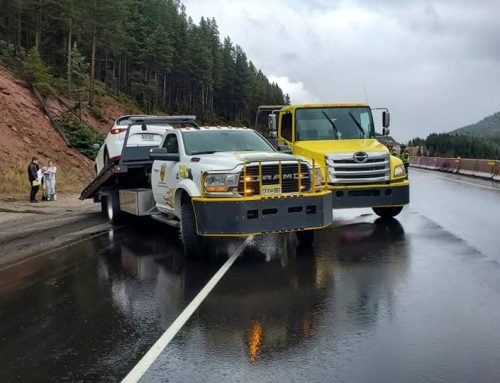
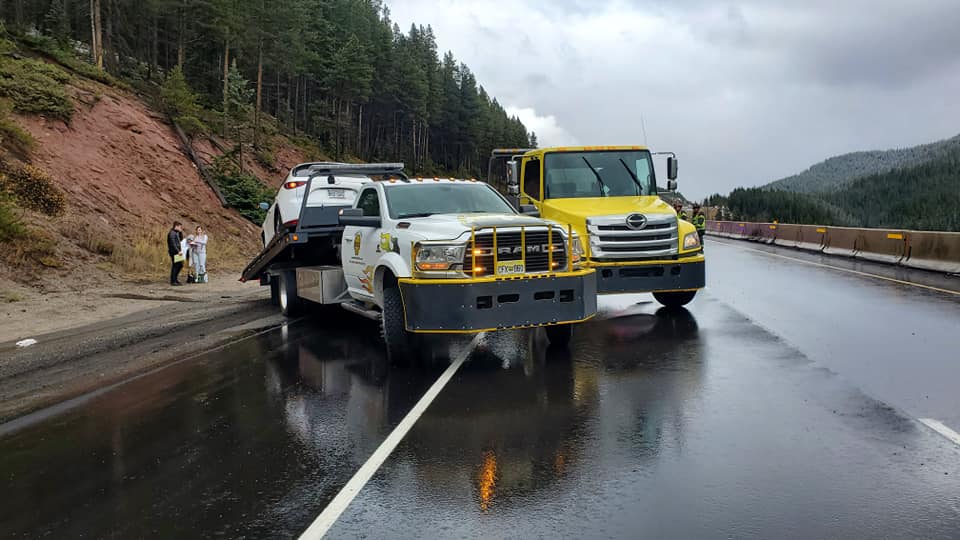
If the elevation gets the better of your vehicle anywhere from the top of Vail Pass to the curves of Glenwood Canyon, West Vail Towing (part of the trusted West Vail Shell family) has been rescuing mountain drivers since 1970 and is standing by 24/7. Whether you’re dealing with an overheated engine in Avon, a dead battery on a freezing morning in Eagle, or a flat tire deep inside Glenwood Canyon, our local experts have the heavy-duty equipment to get you safely off the highway and back on the road.
Just look for our signature white or bright yellow tow trucks with the Shell logo on the doors!
If you find yourself stranded, call us immediately at (970) 476-3394. Save our number before your next drive, and enjoy the stunning Colorado views with peace of mind!