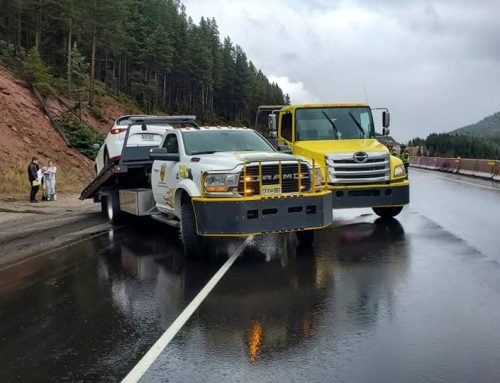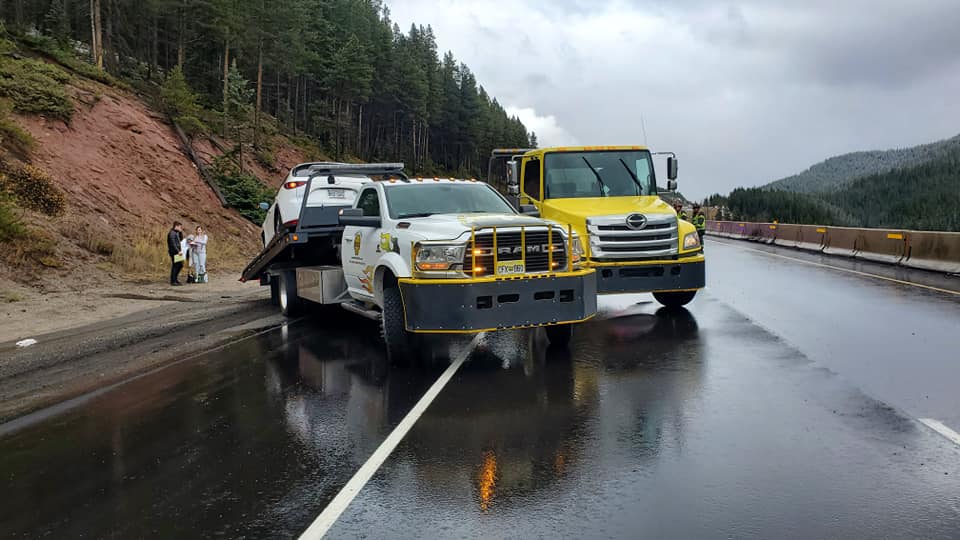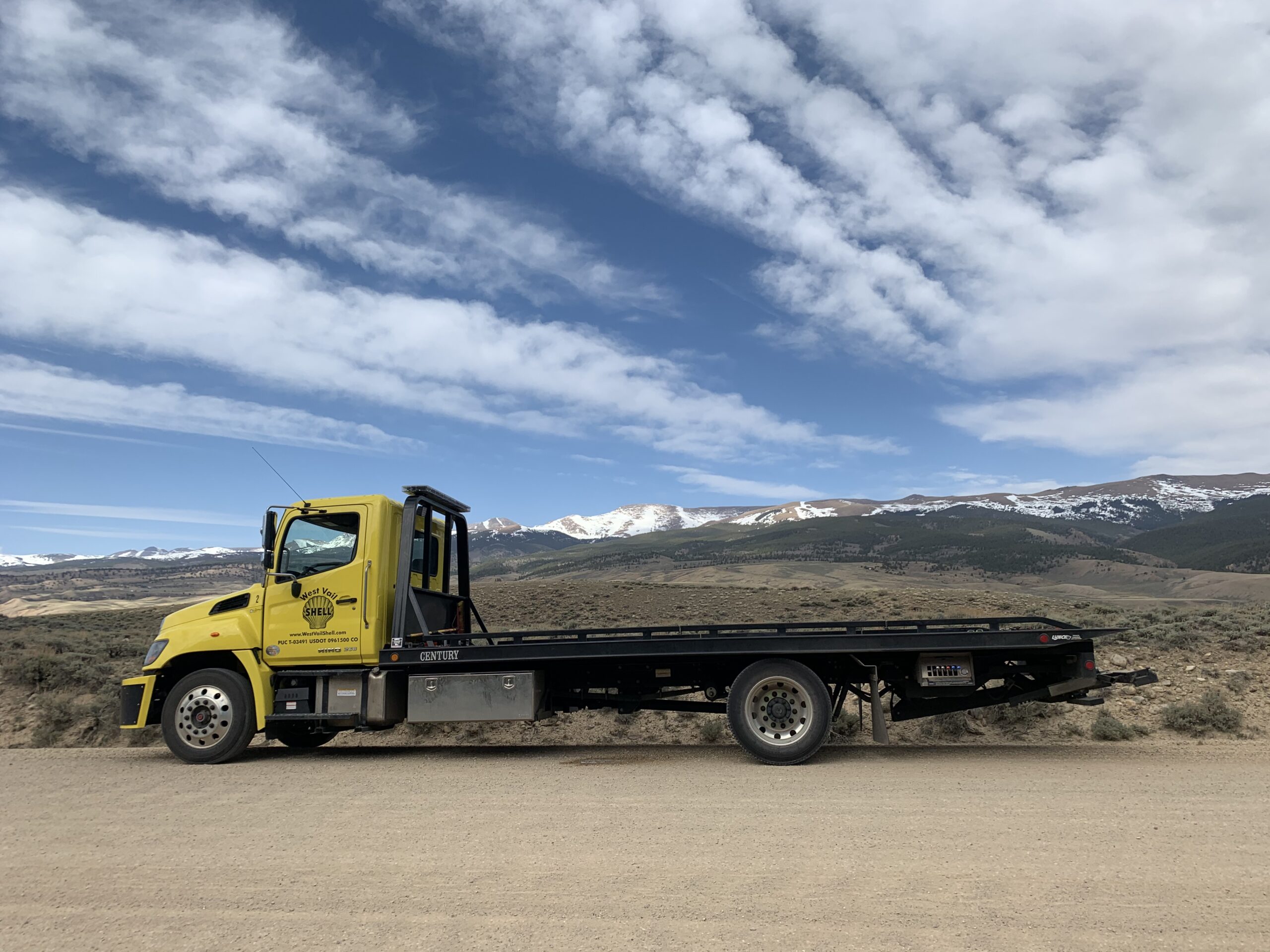
If your vehicle loses momentum on the Vail Pass grade or gets sidelined along I-70, do not let a recovery team drag it with two wheels on the asphalt. For modern All-Wheel Drive (AWD) and Electric Vehicles (EVs), only a flatbed recovery will prevent irreversible driveline damage. Call West Vail Towing — the recovery arm of West Vail Shell — immediately at (970) 476-3394 for an emergency flatbed dispatch.
Navigating Eagle County demands capable transportation. Whether you rely on the constant grip of an AWD system to conquer snowy commutes over Dowd Junction or the instant torque of an EV for high-altitude efficiency along the I-70 corridor from Vail Pass to Glenwood Canyon, your vehicle is a complex machine. However, the advanced engineering that makes these cars perfect for the Colorado mountains also introduces a real vulnerability during a breakdown.
Historically, tow operators could simply hook the drive axles of a stalled car and let the free wheels roll down the highway. Applying that outdated “wheel-lift” method to today’s interconnected drivetrains is a fast track to a costly repair bill. Here’s the mechanical reality behind why your mountain vehicle needs a flatbed — and what actually happens beneath the chassis when the wrong equipment shows up.
1. The Geometry of AWD Damage
Unlike vintage 4×4 trucks with manual transfer cases that fully disengage, modern AWD systems (found in Subarus, Audis, and many SUVs) are permanently active. They constantly hunt for traction, transferring power to all four corners simultaneously.
The Impact: When a conventional tow truck lifts the front end, the rear tires stay on the pavement, spinning at highway speed while the front wheels register zero. The vehicle’s center differential has to reconcile that mismatch, and in vehicles with a viscous coupling, this rapidly heats the fluid inside. Without the engine running to provide cooling and lubrication, sustained mismatch like this can fuse internal components together — a failure Subaru, among other manufacturers, explicitly warns against in its own service bulletins.
The Fix: The entire footprint of the vehicle needs to come off the roadway. A flatbed recovery keeps the AWD system completely static during transit, eliminating the rotational mismatch altogether.
2. Why “Neutral” Doesn’t Stop the Grind
A persistent myth suggests that shifting an automatic into “Neutral” fully disconnects the drivetrain, making the car safe to drag. In modern AWD vehicles, that’s not accurate.
The Impact: Neutral is designed to let a vehicle be pushed a few feet into a service bay — not dragged for miles. While neutral detaches the engine from the transmission, the output shaft and internal transfer gears stay physically coupled to the rolling wheels. With the engine off, the oil pump isn’t running, so those gears are spinning dry, generating friction that wears shafts and bearings faster than they were designed for.
The Fix: Don’t treat “Neutral” as a mechanical failsafe. If the tires of an AWD vehicle are rolling on asphalt, the internal gears are moving without lubrication. Insist on a flatbed dispatch to keep the undercarriage completely still.
3. Uncontrolled Regeneration: How EVs Get Damaged in Tow
Electric Vehicles, from the Rivian R1T to the Tesla Model Y, use a fundamentally different architecture than internal combustion engines. There’s no multi-gear transmission — the electric motors are directly connected to the wheel axles.
The Impact: Because there’s no clutch to separate the wheels from the drive motors, dragging an EV forces the rolling tires to spin the resting motors. Those motors then act as generators, producing current the vehicle’s systems aren’t set up to manage. That uncontrolled electrical load creates heat and resistance that can permanently damage the motor, inverter, and battery management hardware — repair costs that are typically not covered under manufacturer warranty when caused by improper towing. This is exactly why Tesla, and every other EV manufacturer, prohibits flat-towing with wheels rolling on the ground for any real distance.
The Fix: The wheels need to be fully isolated from the road surface. No rotation means no uncontrolled current, which is why flatbed transport is the standard for EV recovery.
4. The Crucial Software Step: “Tow” or “Transport Mode”
Because of the direct-drive connection in EVs, even the brief process of winching the vehicle onto a flatbed requires specific digital preparation.
The Impact: Attempting to winch a powered-down EV onto a flatbed while it’s still in “Park” drags the parking mechanism and locked wheels across the ramp. That flat-spots tires and can damage the parking pawl and electronic parking brake calipers.
The Fix: Before the winch cable is ever tensioned, the operator needs to activate the vehicle’s “Tow Mode” or “Transport Mode” through its onboard system. This tells the car’s computer to release the parking brake and let the wheels roll freely for the winch process — exactly as outlined in manufacturer towing guides.
Frequently Asked Questions
Is it safe to tow a Subaru with a two-wheel dolly? Not recommended. With the exception of the rear-wheel-drive BRZ, Subaru’s Symmetrical AWD system is not tolerant of partial towing without disconnecting the driveshaft first — a step that requires the right equipment and know-how. A two-wheel dolly on a connected AWD system risks fast heat buildup in the center differential and potential driveline damage.
What should I do if a company towed my AWD car on two wheels? Don’t attempt to start or drive the vehicle. Have it flatbed-towed to a certified diagnostic center and ask the mechanics to inspect the transmission and differential fluid for metal shavings. Document what they find — it can support a claim against the tow operator, but you’ll want to loop in your insurance company (or an attorney, for a significant repair bill) on how liability actually gets established.
Are West Vail Towing’s trucks equipped for EV and AWD recoveries? Yes. As the largest AAA tow company in Eagle County, our fleet prioritizes modern flatbed carriers built for the precise recovery of complex drivetrains, high-voltage architecture, and low-clearance vehicles.
Need Specialized Recovery in Eagle County?
Whether you suffered a sudden battery failure in Edwards or a tire blowout near the summit of Vail Pass, don’t compound the problem with the wrong towing equipment. You need a recovery team that understands the mechanical DNA of your mountain vehicle.
Call West Vail Towing at (970) 476-3394 — available 24 hours a day.
Our dispatchers will make sure the exact flatbed setup required for your specific make and model gets routed to your location, getting you and your vehicle to safety without risking secondary damage. West Vail Towing has been recovering vehicles along the I-70 corridor from Vail Pass to Glenwood Canyon since 1970, and our white and yellow trucks with the Shell logo on the door are a familiar sight on this stretch of highway — keep an eye out, and don’t be surprised if the truck that pulls up already has another AWD or electric vehicle loaded on it. Handling these recoveries is routine work for our team, not the exception.