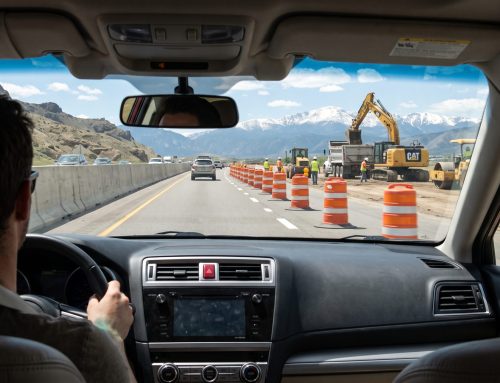
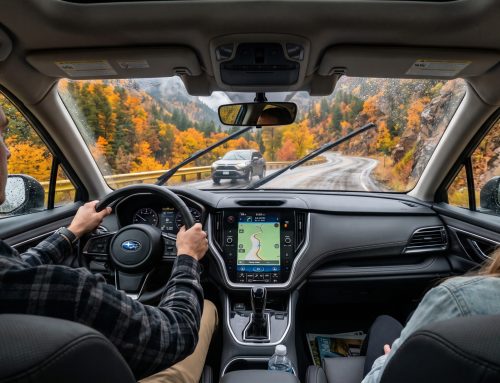
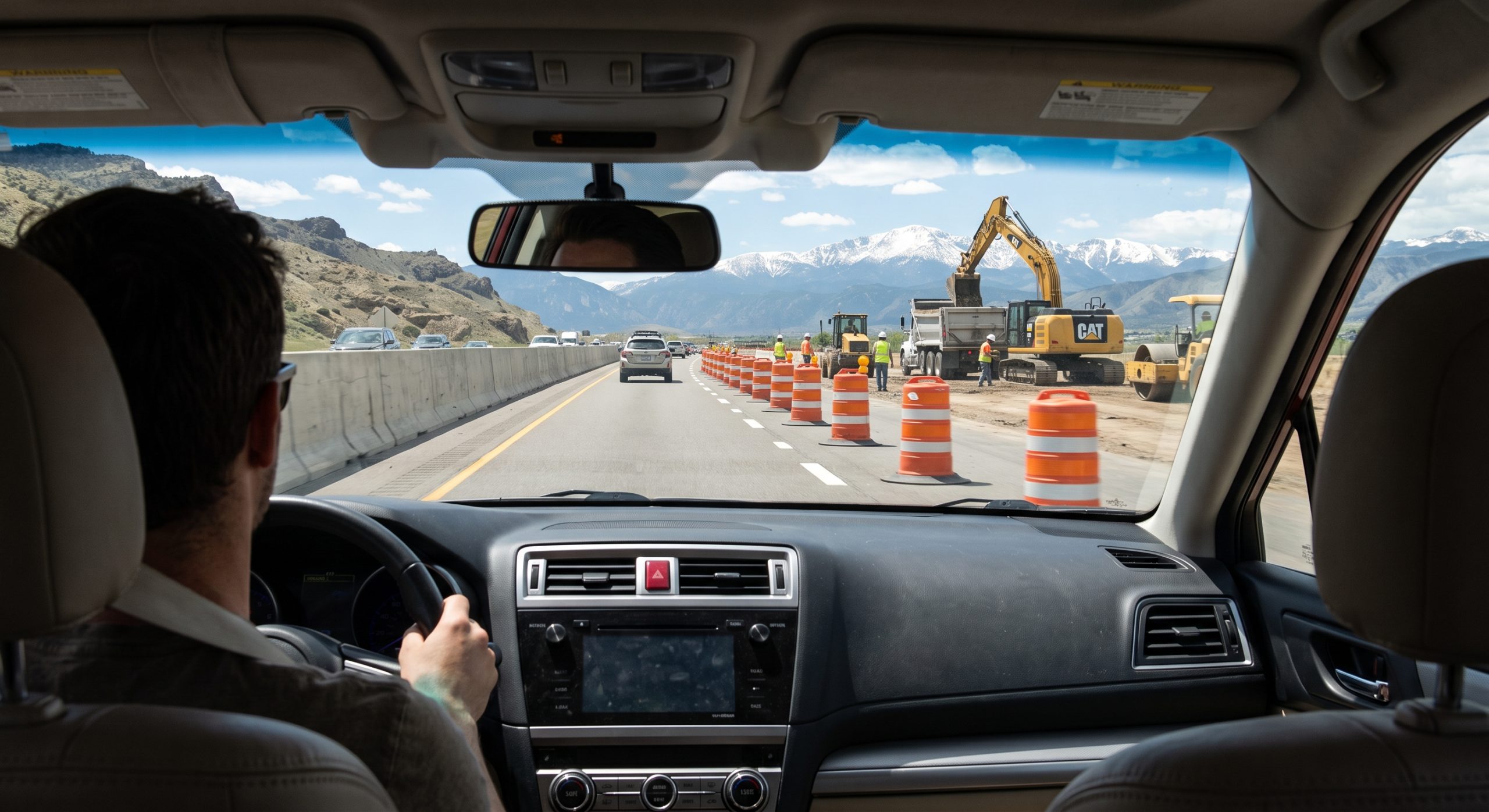
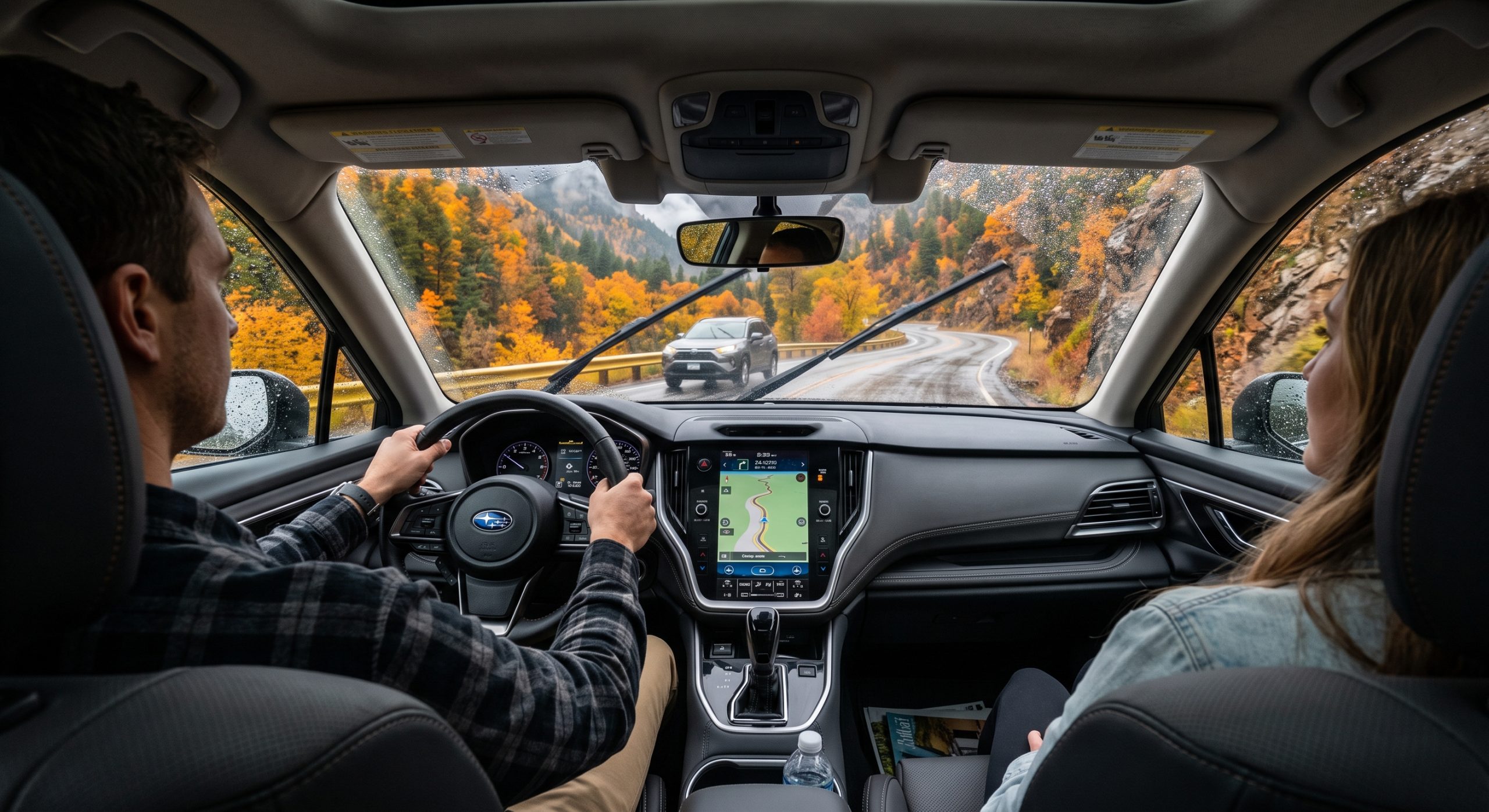
This year, the weather has stayed in the 80s at the beginning of September, giving drivers a false sense of summer lingering on. Even with sunny skies and dry roads, the Colorado Department of Transportation (CDOT) enforces chain and traction laws starting September 1st through May 31st on Interstate 70 between Morrison and Dotsero. That means whether you’re driving through Vail, Avon, or Eagle, the law applies—regardless of whether there’s snow on the ground.
Understanding these laws is crucial to avoiding fines, keeping the roads safe, and ensuring you’re not left stranded when the weather changes suddenly, which is common in the high country.
What Is Colorado’s Traction Law?
The Traction Law (Code 15) requires that all vehicles traveling on I-70 in the mountains during enforcement season (September 1–May 31) meet specific traction requirements. These include:
- Tires must have at least 3/16” tread depth.
- Vehicles must be equipped with all-wheel drive (AWD) or four-wheel drive (4WD), snow tires, or mud and snow (M+S) rated tires.
- Alternatively, drivers can carry an approved traction device like tire chains or an AutoSock.
This law is proactive—it ensures that even when the weather shifts unexpectedly, vehicles have the grip they need to avoid spinouts, crashes, and major traffic backups.
What Is the Chain Law?
The Chain Law (Code 16) is stricter and usually comes into play during heavy snowstorms. For passenger vehicles, it requires:
- Chains or an approved alternative traction device on two or more drive wheels.
For commercial vehicles over 26,000 pounds (like semis and buses), the chain law is even more specific, requiring chains on multiple drive axles.
Why the Law Starts in September—Even in Warm Weather
It may feel odd to think about snow tires and chains when the weather is still mild. But Colorado weather is famously unpredictable. A sunny 70-degree afternoon in Vail can turn into a snow squall over Vail Pass in just a few hours.
That’s why CDOT enforces the law seasonally, not just during active storms. By requiring readiness from September through May, drivers can’t claim “surprise” when the first snowstorm hits. It also prevents dangerous situations where unprepared vehicles cause closures or accidents on steep grades like the Eisenhower Tunnel or Vail Pass.
Penalties for Ignoring the Law
Failing to comply with traction and chain laws comes with steep consequences:
- Traction Law Violation: $100 plus surcharge (source: Colorado Revised Statutes §42-4-235)
- Chain Law Violation: $500 plus surcharge (source: CDOT Chain Law Enforcement)
- Blocking Traffic due to Non-Compliance: $1,000 plus surcharge (source: CDOT Chain Law Enforcement)
These fines are costly, but the real danger is being stranded in the mountains—or worse, causing an accident that endangers others.
How to Prepare Your Vehicle
Even in September, drivers should prepare for the long enforcement season ahead. Here’s a checklist:
- Check Your Tires
- Measure tread depth; replace tires if below 3/16”.
- If you live in or frequently travel through the mountains, upgrading to winter-rated tires can make a big difference in safety.
- Carry Traction Devices
- Store a set of chains or a traction aid like AutoSocks in your trunk.
- Practice using them so you’re not learning on the side of the road in poor weather.
- Inspect Your Vehicle
- Make sure brakes, windshield wipers, and fluids are in top condition.
- Have your 4WD/AWD system serviced before winter.
- Pack an Emergency Kit
- Include blankets, water, food, flashlight, and a first-aid kit.
The Role of Towing Services in the Chain and Traction Season
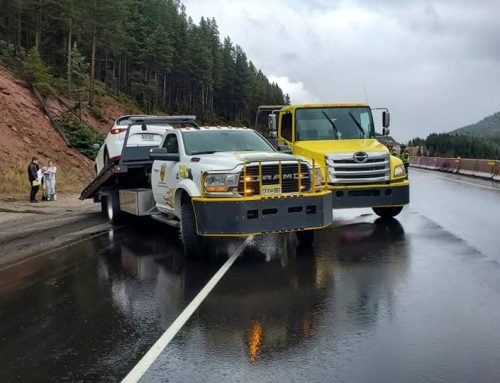
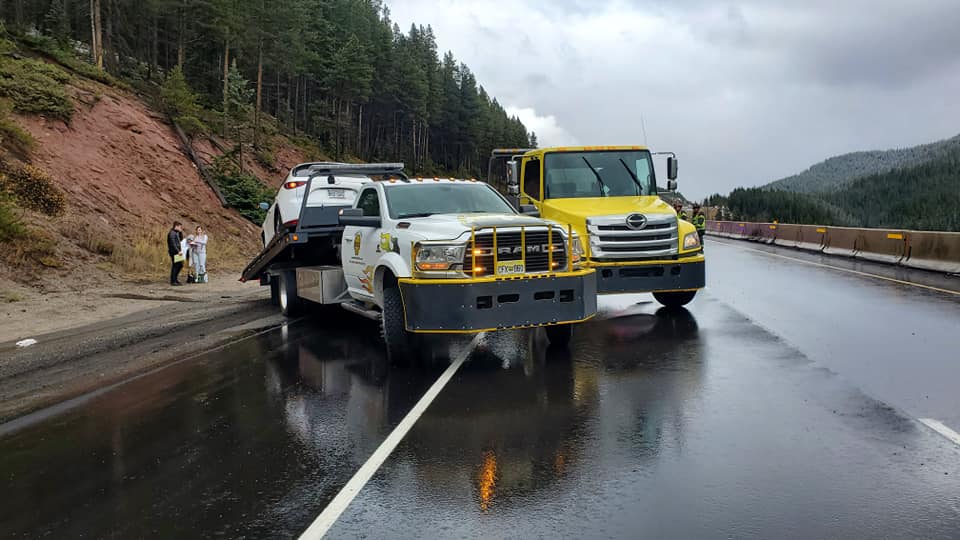
Despite good planning, vehicles can still experience breakdowns or get stuck. Colorado weather can turn quickly, and a snowstorm may arrive anytime from September onward. When drivers are caught off guard, towing companies like West Vail Towing & Recovery step in to keep people safe and restore traffic flow on I-70.
West Vail Towing provides:
- 24/7 roadside assistance across Eagle County.
- Vehicle recovery from snowbanks and ditches.
- Towing for cars, SUVs, and trucks of all sizes.
- Fast response to minimize road closures and delays.
Even if it’s warm and sunny in September, Colorado’s chain and traction law is in full effect. These requirements are about being prepared ahead of time, not just responding when snow starts to fall. By keeping your vehicle compliant, you avoid fines, protect yourself and others, and help keep Colorado’s mountain highways safe and open.
If you do find yourself in trouble—whether it’s a spinout, breakdown, or accident—West Vail Towing & Recovery is here to help 24/7. Call 970-476-3394 anytime for professional, reliable assistance.