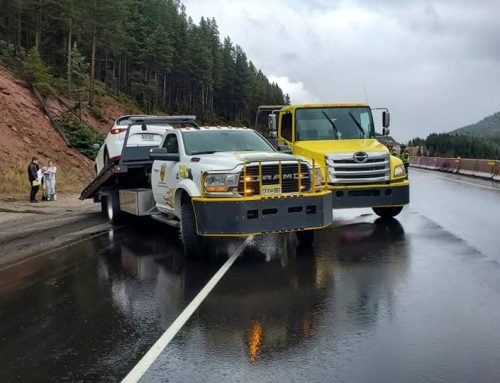
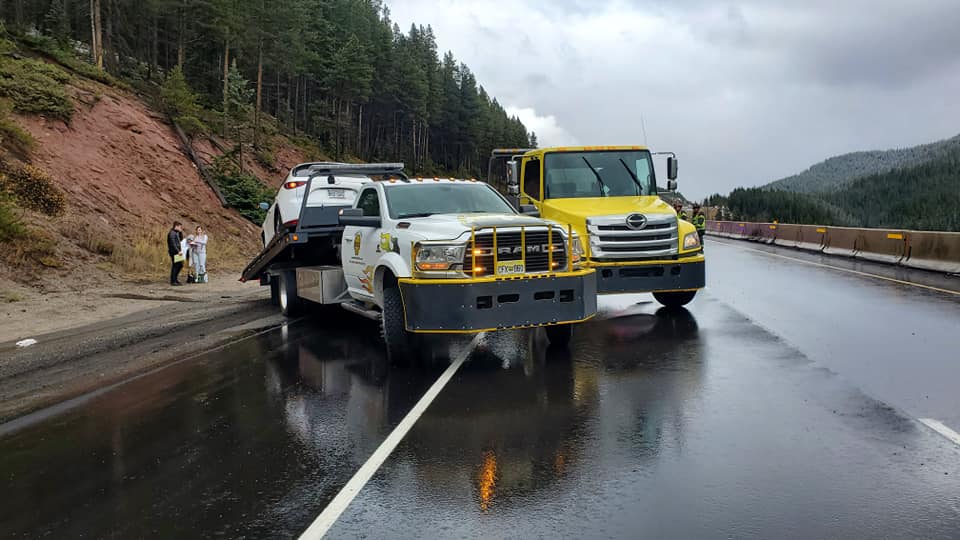
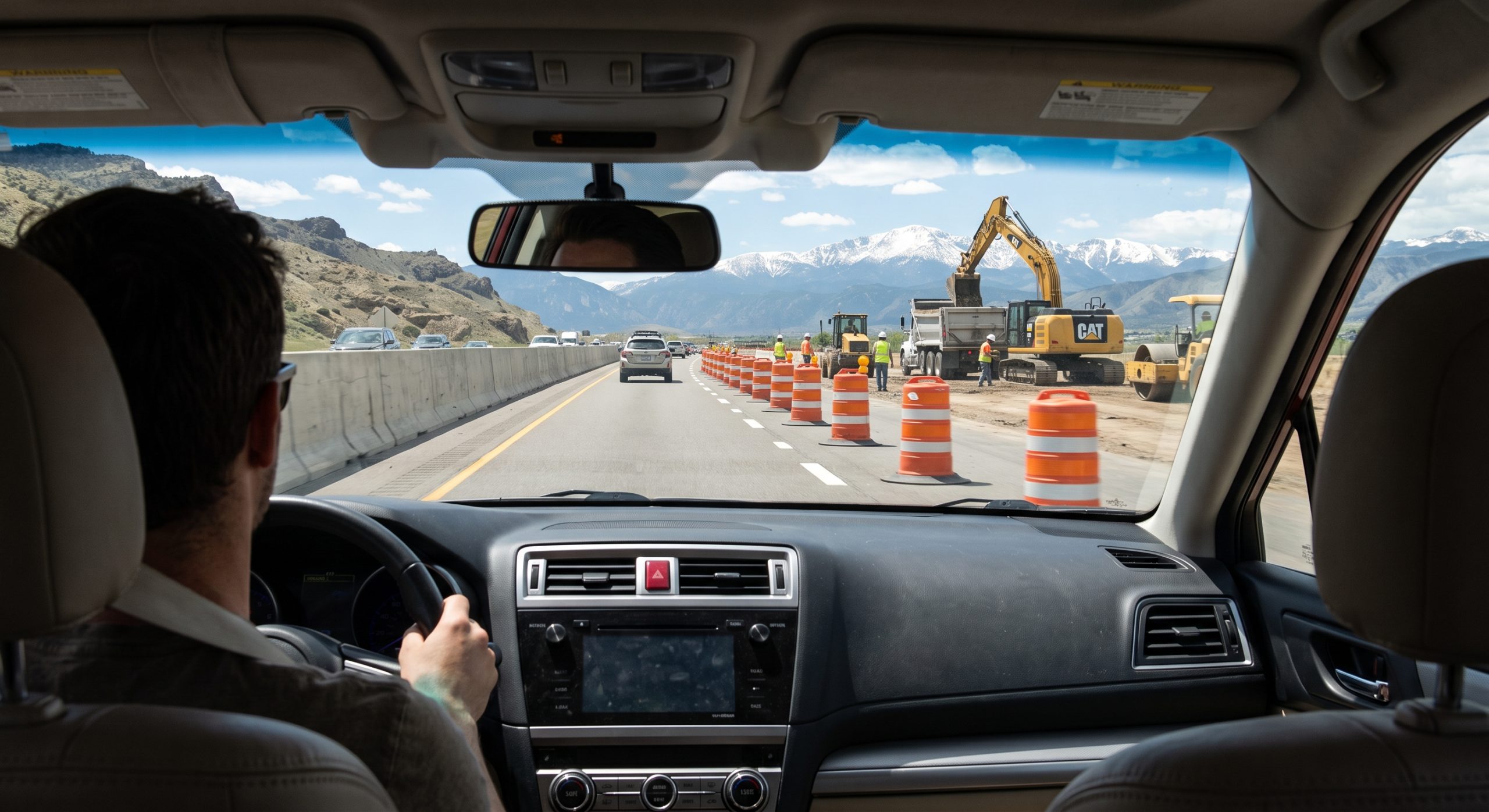
For a commercial driver, there are few feelings worse than losing power halfway up Vail Pass. The grade is steep, the shoulder is narrow, and the temperature gauge is likely dropping fast.
But here is the good news: A breakdown doesn’t always mean a heavy-wrecker bill.
For over 50 years, West Vail Towing has been the local expert on these roads. We know that many of the most common issues stopping heavy-duty trucks in the Colorado mountains—frozen air lines, gelled diesel, or dead batteries—can be fixed right on the side of the road. You don’t always need a massive rotator to drag you to a shop; sometimes, you just need the right roadside assistance team to get you running again.
If you find your rig stalled on I-70 anywhere from Vail Pass to Glenwood Canyon, follow these tips to keep yourself safe and get moving faster.
1. How do I keep my truck safe while waiting for help?
Secure the scene immediately. Before you even pop the hood, you need to make sure you aren’t the cause of a secondary accident. Mountain highways have blind curves, and other drivers may not see you until it’s too late.
- Lights On: Activate your hazards immediately.
- Triangles Out: Federal regulations require you to place warning devices within 10 minutes. On a two-lane road or undivided highway, place them 100 feet in front, 10 feet behind, and 100 feet behind your truck.
- Stay In the Cab: Unless you are actively placing triangles or checking a specific repair, the safest place to be is strapped into your driver’s seat.
2. How do I fix gelled diesel or frozen air lines on the road?
Call for mobile fluid delivery. In the high Rockies, altitude and temperature mix to create unique problems for heavy trucks. Before you assume the engine is blown, check for the two most common culprits:
Diesel Gelling
If your engine is sputtering, losing power, or won’t rev up, your fuel might be gelling. This happens when the paraffin wax in diesel solidifies in extreme cold, clogging your fuel filters.
- The Fix: You may not need a tow! We can deliver emergency anti-gel additives and fresh fuel filters directly to you on the roadside to get that wax melted and fuel flowing again.
Frozen Air Lines
If your brakes are locked up and won’t release, moisture in your air lines may have turned to ice.
- The Fix: Don’t try to drag the tires. Our trucks can bring air line de-icer (often called “air brake antifreeze”) to dissolve the blockage and release your brakes safely.
3. Should I ask for a tow truck or a service truck?
Be specific about your symptoms. When you call for help, the details you give the dispatcher make a huge difference in how fast you get back on the road.
If you call and simply say, “I’m broken down,” some companies might dispatch a massive, oversized wrecker. That costs a fortune and takes time to set up.
Instead, tell West Vail Towing exactly what is happening: “I’m in a Freightliner on Mile Marker 180, I have a crank but no start, and I think I’m gelled up.”
We operate a versatile fleet of heavy-duty capable trucks that are designed for these mountain roads. They are big enough to tow you if needed, but agile enough to maneuver quickly to your aid. Most of our trucks are fully stocked with tools, jump packs, fluids, and filters to fix you on the spot. This offers you the best of both worlds: repair first, tow second.
4. How can I prevent my batteries from dying while stalled?
Limit electrical use to essentials. Modern rigs have massive electrical draws. If you’ve been sitting on the shoulder running your heater and lights while waiting out a road closure, your batteries can drain faster than you think. Once the voltage drops too low, the truck’s computer won’t let the injectors fire.
If you do go dead, let us know—we carry heavy-duty 12v and 24v jump start equipment specifically for dual-battery commercial systems.
5. Who is the go-to team for heavy rescue in the Vail Valley?
Call the locals who know the terrain. National dispatch centers often don’t understand that “Mile Marker 190” is on top of a mountain pass in a blizzard. They might send a provider from two hours away.
When you are stuck in Eagle County—whether you are topping Vail Pass, pulling through Avon, or navigating Glenwood Canyon—call the local experts.
Based out of the West Vail Shell in the heart of Vail, West Vail Towing has been serving these roads since 1970. We specialize in heavy-duty roadside assistance and recovery. We know that your goal isn’t to be towed to a shop; it’s to finish your delivery. Whether it’s winching a delivery van out of a snowbank or jump-starting a semi on the shoulder, we have the technique, the experience, and the right trucks to get you moving.
Frequently Asked Questions (FAQ)
What is your service area for heavy duty assistance?
We service the entire Vail Valley and most of Eagle County. This includes critical commercial routes such as Vail Pass (MM180-190), Vail (MM176-180), Avon (MM167), Edwards (MM163), Eagle (MM147), Wolcott (MM157), Gypsum (MM140), Dotsero (MM133), and Glenwood Canyon (MM116-133).
Do you offer 24/7 emergency service for semi-trucks?
Yes, we are available 24 hours a day, 7 days a week. Whether you freeze up at 2 AM or slide off the road during a holiday storm, our dispatch is local and ready to answer.
What specific roadside services do you offer for commercial vehicles?
Beyond standard towing, our fleet is equipped to handle a wide range of roadside emergencies. We provide high-amperage jump starts for dual-battery systems, vehicle lockouts, winch-outs for trucks stuck in snowbanks, and emergency fuel drops—including anti-gel additives to get you moving again.
Which insurance providers do you work with?
We work with major providers including AAA, Allstate, Cross Country, and many others. If you aren’t sure if your fleet insurance covers our service, just give us a call at (970) 476-3394.
Stuck on the pass or in the canyon?
Call West Vail Towing for immediate roadside assistance.