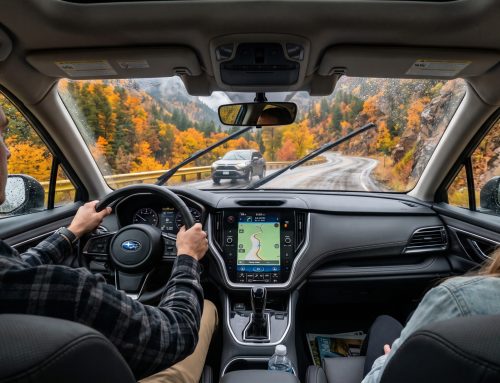
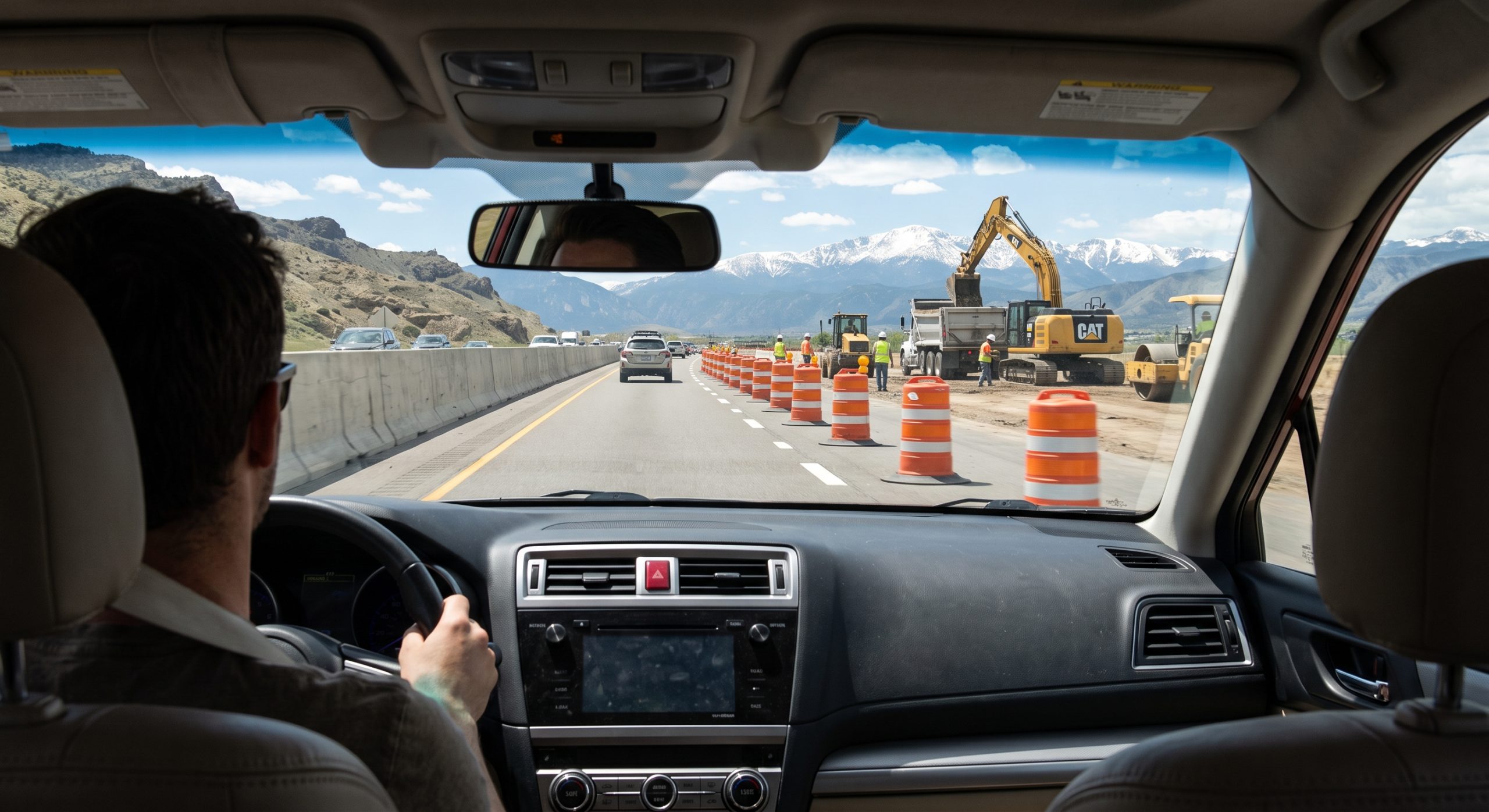
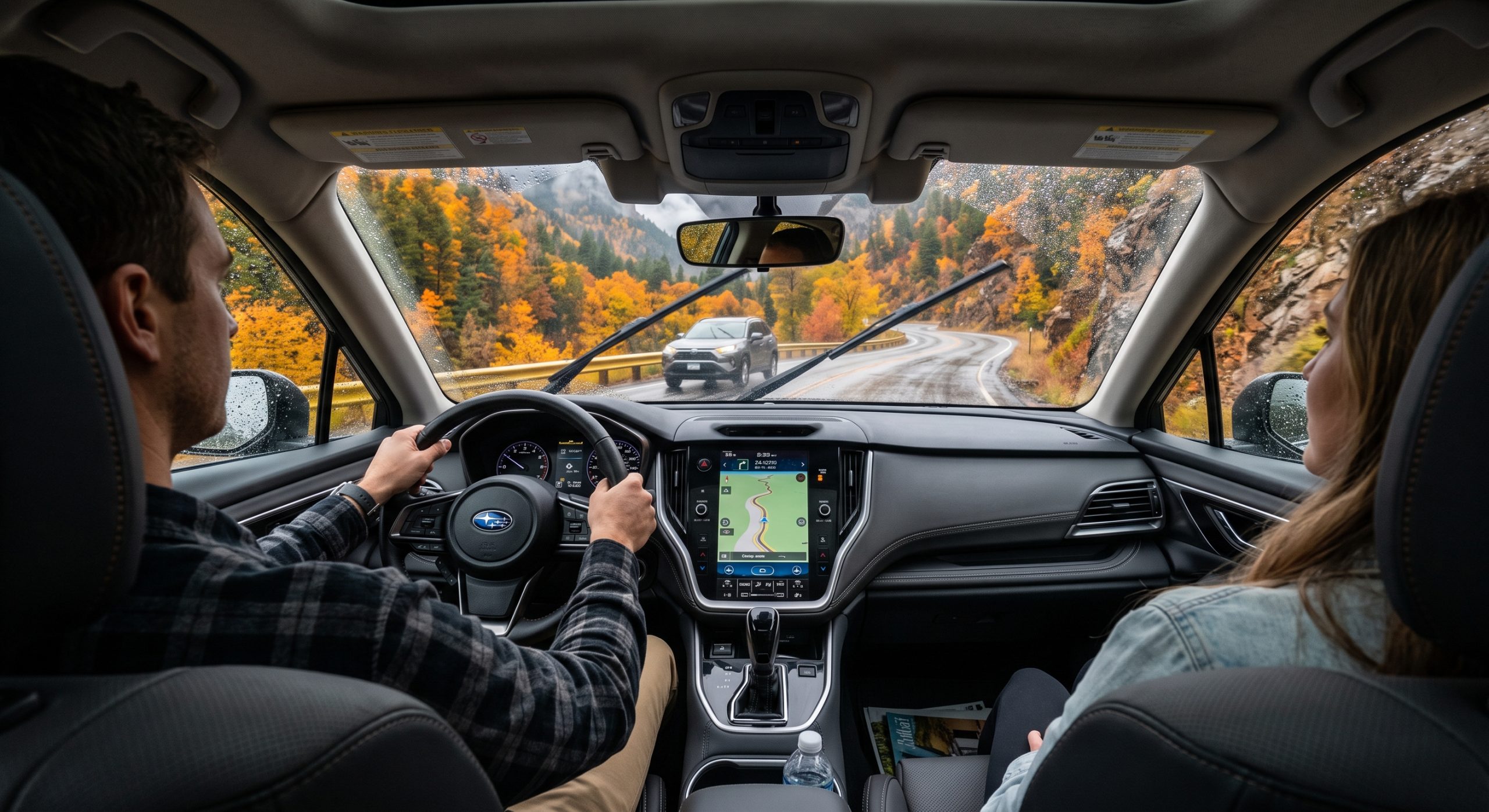
You’re heading down the Interstate after one of those fast, heavy afternoon storms we get up here in the Colorado mountains. The rain has finally stopped, traffic is moving again, and the pavement just looks a little shiny. You aren’t even going that fast.
But suddenly, your steering wheel feels like it disconnected from the rest of the car. You turn it a quarter inch—nothing happens. Your stomach drops.
You’re officially a passenger in your own car. Up here in the mountains, this is usually the part of the story where the dispatch phone rings at West Vail Towing.
We’ve been pulling cars out of these mountain ditches since 1970, and the driver almost always says the exact same thing to us: “I didn’t even hit a puddle.” Here is the truth about why you lose control on wet mountain roads, and exactly what to do when your car decides to go surfing.
Why Your Car is Floating
You don’t need to hit a massive, standing puddle to hydroplane. It happens when water gets trapped under your rubber faster than the treads on your tire can spit it out.
For a split second, your car is literally surfing on a layer of water thinner than a piece of cardboard. If your tires aren’t touching the actual asphalt, you don’t have brakes, and you don’t have steering.
Why It Sneaks Up On You
Most drivers think hydroplaning only happens in torrential downpours. But on our mountain stretches, it usually comes down to three sneaky factors:
- Downhill Momentum: Gravity is already pulling you down the mountain. The faster your tire spins, the less time it has to scatter the water out of the way.
- Highway Ruts: You know those subtle grooves worn into the right lane by thousands of heavy semi-trucks? Water pools in them. The road might look flat, but you’re actually driving through two shallow rivers.
- Tread Depth: Bald tires are a fast track to the ditch. If the grooves on your tires are worn down, there is nowhere for the water to escape, so it just wedges right under the tire.
How It Feels From the Driver’s Seat
Because hydroplaning happens underneath your car, your eyes usually won’t warn you. Pay attention to how the car feels.
- The Feather-Light Steering Wheel: It feels exactly like you just hit a patch of pure, black ice. The wheel offers zero resistance.
- The Engine Spike: Sometimes, your engine will suddenly get loud and the RPMs will shoot up. That’s because your driving wheels just lost contact with the heavy road and are suddenly spinning freely in water.
- The Tail Wag: You might feel the back end of your car start to slide out or drift, even if you are driving on a completely straight stretch of road.
The “Oh Crap” Moment: How to React
If you feel the car start to float, your natural, human instinct is going to tell you to panic, stomp the brakes, and wrench the steering wheel. Do not do this. The absolute worst thing you can do is lock up your brakes while floating. The second those locked, unmoving wheels touch dry pavement again, they will violently grab the road and throw your car into a spin.
Here is how you get your grip back:
- Take your foot off the gas. Don’t jump off the pedal, just ease off it. Let the natural drag of the water slow the car down until the tires sink back onto the asphalt.
- Keep your foot entirely away from the brake. 3. Hold the wheel steady. Don’t try to wrestle the car back into the lane. Hold your hands still and keep the wheels pointed straight to follow the curve of the Interstate.
When You End Up in the Ditch
Sometimes you do everything perfectly, but gravity and momentum win anyway. It happens incredibly fast.
Sliding off a mountain Interstate usually means ending up in soft mud, wedged against a rocky embankment, or tangled in a cable barrier. If you slide off, don’t try to floor it and drive yourself out. You will just bury the frame of your car deep in the mud or destroy your transmission.
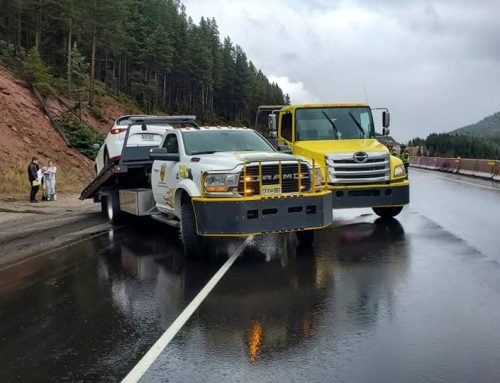
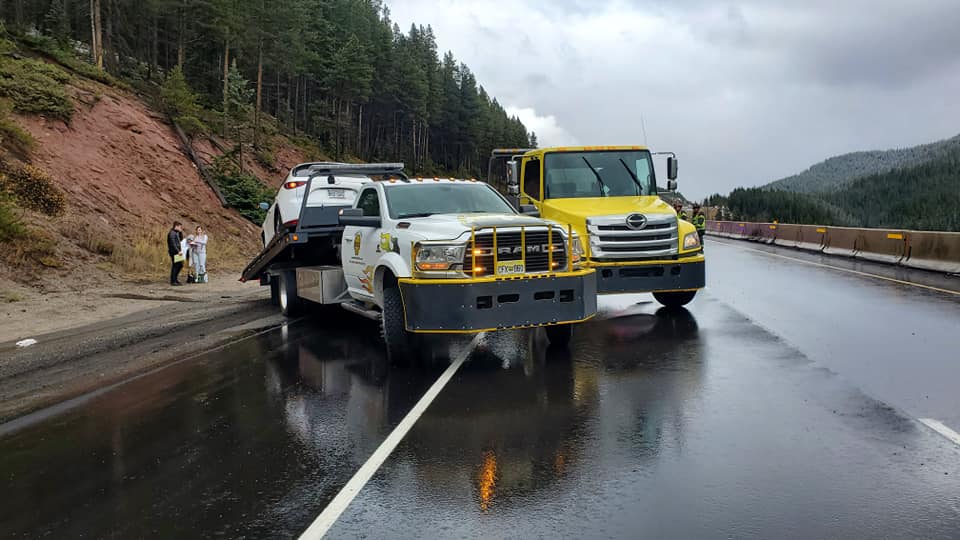
Put your hazard lights on, stay inside the car (our mountain shoulders are notoriously dangerous to stand on), and give West Vail Towing a call. As a proud part of West Vail Shell, we’ve been recovering vehicles on this stretch of Interstate since 1970. We have the heavy-duty winches required to pluck you out of the mud and back onto solid ground without ripping your bumper off in the process. Just sit tight, stay safe, and look for one of our signature white or bright yellow tow trucks with the Shell logo on the door coming to get you.